Inside Broadway’s Immersive Nightclub Revolution: Why ‘Just In Time’ Is Quietly Rewriting The Rules
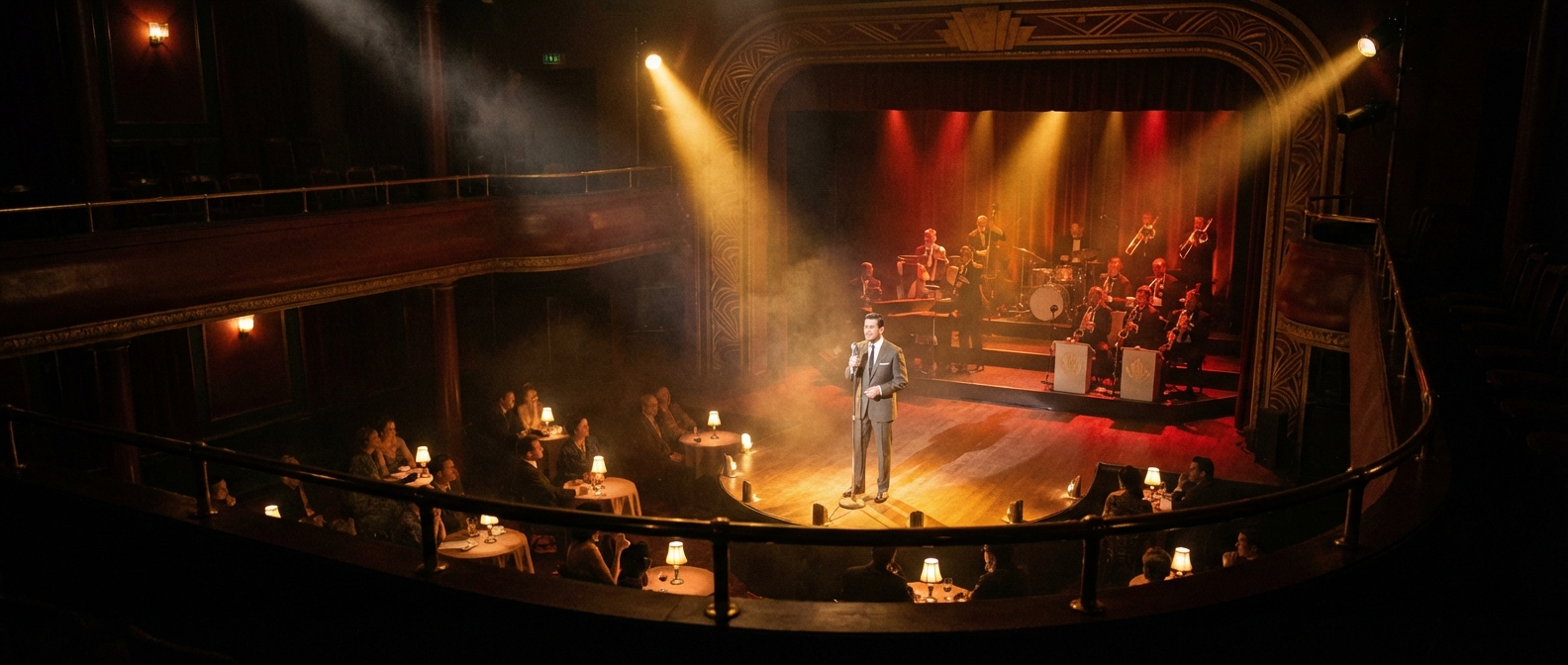
If you love Broadway but sometimes feel like you are watching it through glass, you are not imagining things. A lot of big musicals still keep the audience at a polite distance. You sit down, lights go dim, stars perform up there, and you admire it from here. Nice, sure. But not exactly electric. That is why the talk around Just In Time Broadway immersive musical matters. The real story is not only celebrity casting or Jonathan Groff passing the role to Jeremy Jordan in April 2026. It is the bolder choice underneath that headline. This production turns Circle in the Square into something closer to a working nightclub than a traditional Broadway house. The room, the band, the seating, and the audience relationship all start doing storytelling work. That shift may sound subtle, but it changes how a musical feels in your body, and it could change how more shows are built from here on out.
⚡ In a Hurry? Key Takeaways
- Just In Time is rewriting Broadway rules by treating the theater like a nightclub, not a distant picture frame.
- If you are comparing shows, pay attention to room layout, band placement, and audience proximity, not just who is starring.
- Immersive staging can make live theater feel more thrilling, but it also raises real questions about ticket pricing, sightlines, and access.
Why this show feels different
Broadway has always loved spectacle. Big sets. Big names. Big applause breaks. But Just In Time is chasing something more intimate. It wants the room to hum.
That matters because the show centers on Bobby Darin, a performer whose appeal was never just his songs. It was the sense that he was right there with you, flirting with the crowd, playing the room, turning performance into contact. A standard proscenium setup can tell you that story. A nightclub setup lets you feel it.
That is the key difference. One version says, “Here is a famous life.” The other says, “Come inside the heat of it.”
What “immersive” actually means here
“Immersive” gets thrown around so often that it can start to mean nothing. In this case, it is more concrete.
The room is part of the plot
Circle in the Square already has one big advantage. It is built to bring the audience closer than many Broadway houses do. Instead of staring at a faraway stage framed like a painting, you are wrapped around the action. That alone changes your role from observer to participant.
Just In Time pushes that further by leaning into a cabaret and nightclub mood. The venue is not just hosting the story. It is helping tell it. That means environment becomes narrative.
The band is not hidden homework
In many musicals, the orchestra is physically present but emotionally invisible. You hear them. You rarely feel them as part of the scene. Here, the band becomes part of the storytelling mix. That matters in a Bobby Darin musical because live musicians are not decoration. They are part of the pulse, swagger, and momentum.
When the band feels embedded in the world of the show, the whole evening gets less museum-like. You stop consuming a polished product and start feeling a live event unfold around you.
The audience is folded into the rise
This is the sneaky genius of the format. Bobby Darin was not built in a vacuum. He was built in rooms. In reactions. In atmosphere. In the chemistry between performer and crowd. By placing the audience inside that exchange, the production makes his ascent feel less like a history lesson and more like a chain reaction you are helping complete.
Why producers are suddenly so interested in this kind of staging
Because audiences are tired of passive premium experiences.
People can get glossy visuals anywhere now. Social clips, cast albums, behind-the-scenes videos, fan edits. What they cannot get on their phone is the sensation of sharing oxygen with a performance. That is where theater still wins, and producers know it.
An immersive layout is one way to make live performance feel unmistakably live again. It gives buyers a reason to leave the couch and pay Broadway prices. It also creates social buzz that is actually earned. Not just “look at this costume,” but “you had to be in the room.”
That distinction is important. Broadway is not only competing with other shows. It is competing with every other way people spend a night out.
What this means for ticket pricing and access
Here is the less romantic part. Intimacy is exciting. It is also complicated.
Closer often means pricier
When a production sells proximity as part of the experience, certain seats become more than seats. They become status objects. “In the room” can turn into a premium tier very fast.
That does not mean immersive theater is bad for audiences. It just means fans should watch how producers package it. If every meaningful seat is priced like a luxury add-on, the format can start to feel exclusive in a new way, even while claiming to be more inclusive emotionally.
Sightlines matter more than ever
In a traditional theater, you usually know what a good view means. In a reworked nightclub-style space, the answer gets trickier. Closer is not always clearer. You may gain energy but lose some visual information. A side angle may feel thrilling for one number and frustrating for the next.
That is why buyers should look beyond marketing language. Ask how the room is configured. Ask where the band sits. Ask whether some sections are better for facial acting while others are better for full-stage pictures.
Access has to stay in the conversation
Immersive staging should not become an excuse to make navigation harder for people with mobility, sensory, or seating needs. If producers want to say the audience is part of the show, that audience has to include more than the most physically flexible and financially comfortable ticket buyer.
This is where fans can be useful. Ask practical questions. Are accessible seats integrated well? Are there quieter options? Is the venue clear about what the experience asks of the audience? These are not side issues. They are part of whether this trend grows in a healthy way.
What regional theaters can copy without a Broadway budget
This is where the story gets hopeful.
You do not need Circle in the Square money to borrow the idea. Smaller theaters can use the same thinking on a more realistic scale.
Start with layout, not expensive tech
Move the audience closer. Rework the seating map. Use platforms, cafe tables, side playing areas, or visible musician stations. The goal is not to spend more. It is to reduce emotional distance.
Let the musicians exist in the world of the show
Even a modest production can make the band feel present instead of hidden. For a music-driven story, that one choice can instantly make the evening feel warmer and more alive.
Use atmosphere as storytelling
Lighting, entrances, pre-show sound, and actor traffic through the room can do a lot of heavy lifting. Audiences remember whether a space felt charged. They do not always remember whether a set piece cost a fortune.
That is why theater people beyond New York should pay attention to Just In Time. The lesson is not “copy Broadway.” The lesson is “use the room better.”
How to watch this trend like an insider
If you want to sound less like someone reacting to hype and more like someone tracking where theater is going, focus on a few concrete questions.
Ask what the room is doing
Is the venue just a container, or is it helping tell the story?
Ask whether intimacy serves the material
Some shows fit this style naturally. A Bobby Darin story does. Not every title does. If a production goes immersive just because it is fashionable, audiences can tell.
Ask who benefits
Does the new layout create better storytelling for most of the house, or is it mainly creating a handful of premium experiences for top spenders?
Ask what can travel
The smartest productions do not just impress. They teach the field something. In this case, the teachable idea is that audience proximity, visible musicians, and environment-led storytelling can be more valuable than another layer of visual polish.
At a Glance: Comparison
| Feature/Aspect | Details | Verdict |
|---|---|---|
| Venue design | Circle in the Square is used like a nightclub environment, with audience proximity doing real storytelling work. | A major strength. It makes the show feel lived-in instead of presented from afar. |
| Musical presentation | The band is part of the experience rather than background support, which fits Bobby Darin’s performance style. | Smart choice. It adds immediacy and gives the night more pulse. |
| Audience value | The immersive setup can create a stronger emotional payoff, but may also affect pricing, seat value, and accessibility. | Promising, with caveats. Worth watching closely as the model spreads. |
Conclusion
The buzz around Just In Time is not just about Jonathan Groff handing the mic to Jeremy Jordan in April 2026. It is about a mainstream Broadway musical betting that closeness matters. By turning Circle in the Square into a nightclub-like space where the band is woven into the action and the audience is folded into Bobby Darin’s rise, the show is testing a bigger idea about where musical theater goes next. For the Legend The Musical community and for regular fans who just want theater to feel alive again, that is the real story. It gives you useful language to talk about design, not just casting. It helps you compare what New York, London, and regional houses are trying. And it gives local theatergoers something practical to push for at home. More connection. Smarter room use. Fewer velvet ropes between the audience and the thrill of live performance.