Inside ‘Operation Mincemeat’: How A Bonkers DIY War Musical Quietly Took Over Broadway And The West End
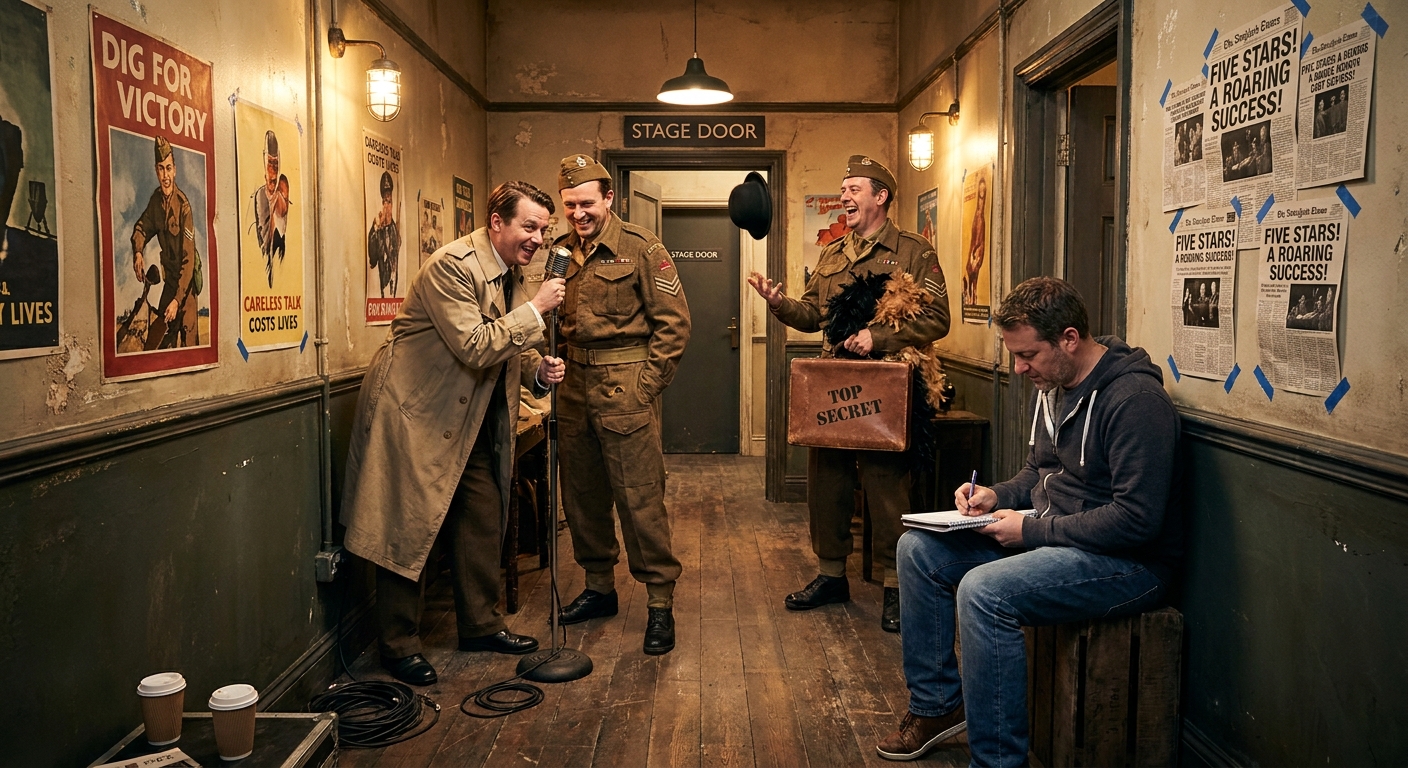
You are not imagining it. A lot of new musicals really do feel focus-grouped to death. Big title. Familiar songs. A poster that sells itself before anyone asks if the story is any good. So when people keep whispering about the Operation Mincemeat Broadway musical like it is some secret password, the hype can sound suspicious. But this one is worth stopping for. What started as a scrappy, oddball World War II musical made by the comedy group SpitLip did not win by outspending the big brands. It won by being sharper, funnier, and more inventive than anyone expected. Its rise from tiny London beginnings to a major West End force, and now a serious Broadway contender, is not just a nice underdog story. It is a case study in how a truly original show can still break through. Better yet, it shows exactly why audiences are starving for something that feels handmade, risky, and alive.
⚡ In a Hurry? Key Takeaways
- Operation Mincemeat became a hit because its writing, comic precision, and low-tech staging made it feel fresh in a market crowded with brand-name musicals.
- If you are an emerging creator, study its actor-led style and word-of-mouth strategy. Build scenes and songs people cannot stop repeating to friends.
- For audiences, this is a useful reminder that the next major hit may not arrive with huge marketing. Sometimes the weird little show is the safest bet for a genuinely great night out.
Why this show hit such a nerve
The true story behind Operation Mincemeat was already a little wild. During World War II, British intelligence used a dead body and a fake identity to trick the Nazis about Allied invasion plans. That is dark material. Complicated material, too. It does not exactly scream “singalong comedy smash.”
And that is part of why the show landed so hard. It took a bizarre historical episode and treated it with a mix of precision, absurdity, heart, and speed. It trusted the audience to keep up. It did not sand off the weirdness. It doubled down on it.
That matters. In an era where plenty of musicals feel carefully engineered not to confuse anyone, Operation Mincemeat took the opposite path. It said, more or less, here is a bonkers true story, a handful of performers playing almost everyone, and songs that can pivot from stupidly funny to oddly moving in seconds. Come with us.
What actually is the Operation Mincemeat Broadway musical?
At its core, it is an original musical comedy based on a real wartime deception operation. The show was created by the British comedy and writing team SpitLip, made up of David Cumming, Felix Hagan, Natasha Hodgson, and Zoë Roberts. They did not begin with a giant built-in audience or a movie tie-in. They built one.
The stage version became a word-of-mouth hit in London, moving through smaller venues before reaching the West End and turning into one of those shows people feel weirdly evangelical about. Now the Operation Mincemeat Broadway musical has become the next test case. Can something this eccentric, this British, this handmade-feeling, travel and connect at the highest commercial level? So far, the signs say yes.
How a DIY show beat bigger, shinier competition
It had a killer book first
If you strip away the buzz, the show’s engine is the writing. The jokes hit. The structure moves. The exposition is clean. The characters are broad when they need to be, but not empty. That sounds basic, but it is rare.
A lot of expensive musicals try to hide weak storytelling behind spectacle. Operation Mincemeat did the reverse. It made the writing the product. That meant audiences did the marketing for them. They left wanting to quote lines, describe scenes, and drag friends back.
The low-tech staging became a feature, not a limitation
This is one of the smartest parts of the whole story. The show does not pretend to be a giant cinematic event. Its style is openly theatrical. Actors switch roles fast. Props do a lot of heavy lifting. The staging invites the audience into the game.
That actor-led approach gives the show speed and personality. It also keeps the focus where it belongs, on timing, character, and surprise. In practical terms, it is cheaper than trying to recreate a war movie on stage. In artistic terms, it is often stronger. The audience fills in the gaps. That participation creates energy.
Its scrappiness became part of the brand
Usually, “small” is a problem producers try to hide. Here, small became proof of authenticity. People sensed they were seeing a show made by human beings with a specific comic voice, not by committee. That makes fans protective. And once fans get protective, they talk. A lot.
The joke density was the marketing plan
You can spend a fortune on ads. Or you can make something so funny that people annoy their friends by talking about it for weeks. Operation Mincemeat chose option two, whether by design or necessity.
This is the bit emerging creators should pay attention to. Word-of-mouth is not magic. Usually it comes from a few very practical things:
- Clear premise. People can explain the show in one breath.
- Memorable tone. It sounds unlike other shows.
- Shareable moments. Audiences leave with specific scenes and songs stuck in their heads.
- A strong point of view. The material feels made, not assembled.
That is exactly what happened here. The show’s comedy gave fans an easy way to sell it. Not with abstract praise, but with stories. “There is this bit where…” is much stronger than “It was well reviewed.”
Why audiences trust it more than some bigger shows
There is a growing fatigue with cultural products that feel pre-approved. People may still buy tickets to them, but they can sense when a show exists because a title was available rather than because someone had to make it.
Operation Mincemeat feels like the opposite. It has the slightly dangerous energy of a thing that should not work, but does. That creates trust. Audiences can tell when a show is trying to surprise them instead of soothing them with familiarity.
That does not mean every original musical will become a smash. Most will not. But this one proves there is still a path, even now, for a writer-driven original to punch through if it is good enough and specific enough.
What Broadway sees in it
Broadway is expensive. Ruthlessly so. That is one reason brands and recognizable titles dominate. They lower the fear level for investors and tourists. So when a show like Operation Mincemeat crosses the Atlantic with real momentum, people pay attention.
Broadway is not just buying a British import here. It is buying a proven audience reaction. The West End run showed that the material can create devotion, repeat business, and cultural chatter. Those are gold in modern theater.
The Operation Mincemeat Broadway musical also arrives at a useful moment. Many theatergoers are hungry for something that feels less processed. If the production keeps its nerve and does not try to over-polish the rough edges that made people love it, it has a real shot at becoming more than a niche import.
Lessons for creators trying to build the next “impossible” hit
1. Start with a voice, not a market category
SpitLip did not seem to begin with “what kind of title is easy to sell globally?” They started with a tone and a comic rhythm that was their own. That gave the show identity.
2. Make constraints work for you
Limited budget forced creative decisions. But those decisions became the appeal. If you cannot afford giant sets, make speed, wit, and performance your spectacle.
3. Give audiences a story to tell after the show
People spread the word when they can describe an experience vividly. “You will never believe how they staged this” is a much better ad than polished generic praise.
4. Do not confuse scale with impact
A show can look modest and still feel huge. In fact, intimacy often reads as confidence when the material is strong.
Lessons for fans who want to spot the next breakout early
If you are tired of seeing the same Broadway ecosystem reward the same kinds of properties, Operation Mincemeat offers a good filter. Look for shows with these signs:
- A premise that sounds risky, but oddly clear.
- Fans who describe specific moments instead of vague excellence.
- A staging style that seems intentional rather than underfunded.
- Writers or performers with a strong comic or emotional voice.
- Buzz that grows sideways through audiences, not just downward from ad campaigns.
That does not guarantee a masterpiece. But it does help separate genuinely alive work from polished product.
What makes this more than a one-off fluke
It would be easy to file this under happy accident. Weird show gets lucky. But that undersells what happened. The show’s rise makes sense when you look closely. It offered relief from sameness. It gave audiences something they could champion as their discovery. It made thrift look stylish. And most important, it delivered.
The delivery part matters most. Plenty of shows have quirky premises. Very few have the discipline to turn that premise into two-plus hours people want to recommend with missionary zeal.
At a Glance: Comparison
| Feature/Aspect | Details | Verdict |
|---|---|---|
| Origin story | Started as a writer-driven original musical from a comedy team, not a built-in franchise or movie adaptation. | Its originality became a selling point, not a handicap. |
| Production style | Actor-led, low-tech staging, fast role switching, and inventive use of props instead of giant spectacle. | Cheaper to mount, easier to tour, and more memorable than overdesigned excess. |
| Growth engine | Sharp writing and a distinct comic voice drove repeat attendance and strong word-of-mouth from the West End to Broadway interest. | A model for how an “unlikely” musical can climb without a mega-producer behind it. |
Conclusion
Operation Mincemeat matters because it is not just a fun outlier. It is proof, right now, that a weird, writer-driven original musical can still bulldoze its way to global status in a market stuffed with brands, biopics, and recycled movie titles. Its deliberately low-tech, actor-led style was not a compromise. It became the point. Its ruthless sense of humor was not just entertainment. It was the marketing engine. That is useful for creators looking for a real-world blueprint, and just as useful for fans who want a better nose for the next “impossible” hit before everyone else catches up. If you have been waiting for evidence that originality is not dead on Broadway or the West End, this is it.