Inside The Greatest Showman’s Leap From Screen To Stage: How A 2017 Movie Just Became 2026’s Must‑Watch Musical
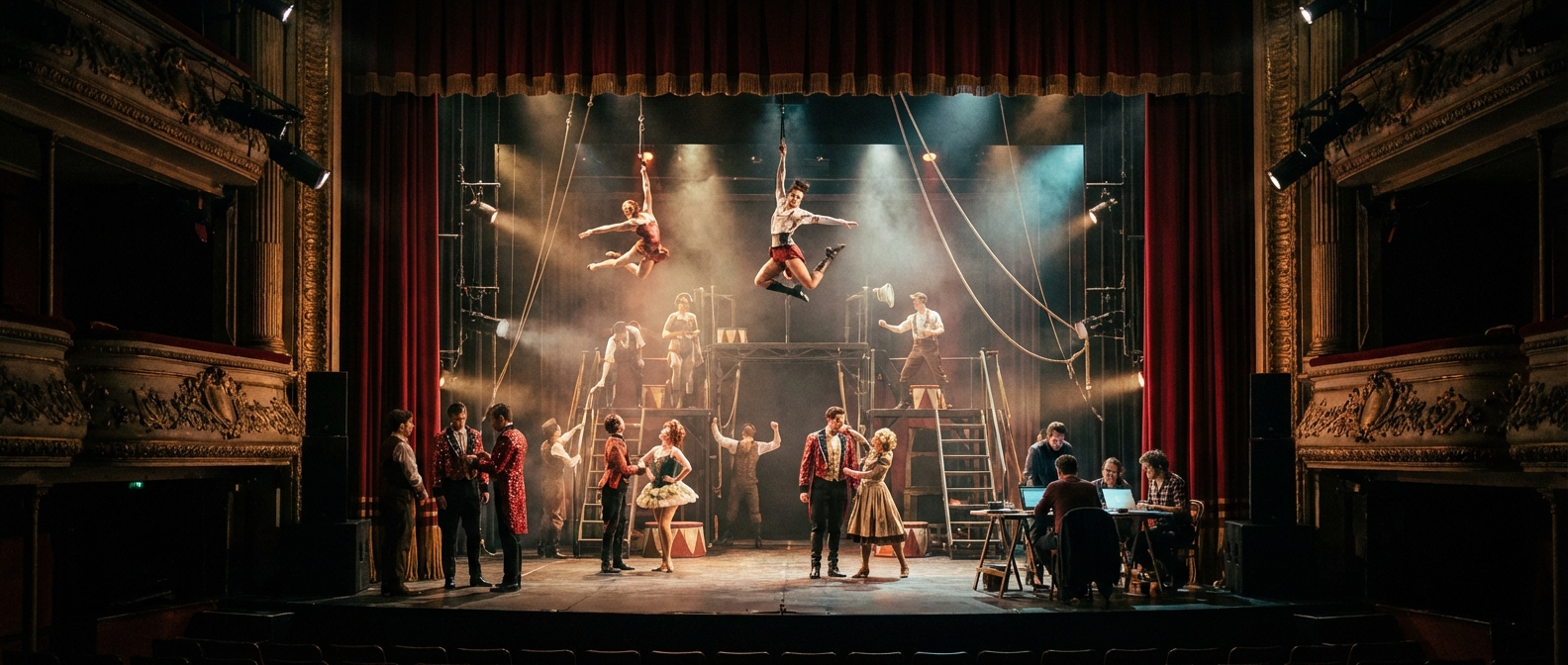
It is easy to get stuck in the same old The Greatest Showman conversation. People still argue about the movie’s historical accuracy, replay “This Is Me,” and treat the stage version like a simple victory lap. That misses the interesting part. The Greatest Showman stage musical 2026 matters because it shows how a modern hit movie gets rebuilt into a live event people will pay premium prices to see more than once. That is why the Bristol run matters so much. Early audiences are not just watching a musical. They are stress-testing a product that could shape Broadway, the West End, and international tours for years. If you want to see where spectacle-heavy musicals are headed next, stop looking only at fan nostalgia. Start looking at the mechanics. New songs. Story changes. Audience reactions. Brand positioning. That is where the real story is, and it is much more useful than another round of film discourse.
⚡ In a Hurry? Key Takeaways
- The Greatest Showman stage musical 2026 is best understood as a test case for the next wave of big-brand event musicals, not just a stage copy of the film.
- Watch Bristol audience response, new Pasek and Paul material, and Disney Theatrical’s rollout strategy if you want to predict its long-term future.
- For fans and smaller creators, the value is practical. This production shows how major musical brands are built, refined, and sold in real time.
Why this stage version is a bigger deal than it first looks
Film-to-stage adaptations are common now, so it is fair if your first reaction was, “Okay, another one.” But this one lands differently.
The 2017 movie was not just successful. It became sticky. Its songs lived on playlists, school performances, talent shows, and social media long after the usual movie-musical buzz faded. That kind of afterlife matters because producers love titles with built-in emotional memory. It lowers the risk. People already know the songs. They already know the images. They already feel like they own a piece of it.
That does not mean a stage transfer is automatic. In fact, it creates a harder problem. A live audience will not accept a tribute act with better lighting. They need a reason to leave the house, pay theater prices, and sit in a room where the spectacle has to happen without film editing doing half the work.
That is the challenge sitting at the heart of The Greatest Showman stage musical 2026. Can it turn a movie remembered for cinematic polish into a piece of live theater that feels worth the trouble?
Why Bristol is not just a warm-up stop
When a major production opens outside London or New York first, casual fans often treat it like a soft launch. Industry people know better. Bristol is where the show learns what it actually is.
Out-of-town runs do three very practical things.
1. They expose story problems fast
A film can hide weak connective tissue with close-ups, editing, and sheer momentum. On stage, the gaps show up immediately. If a scene drags, the room tells you. If a character shift does not track, you feel the audience pull back. If a big number arrives before the story earns it, applause gets polite instead of explosive.
2. They test the balance between nostalgia and surprise
Too much loyalty to the film and the show feels flat. Too much reinvention and fans feel cheated. Bristol gives the creative team a live reading on where that line really sits.
3. They turn audience reaction into a development tool
This is not cynical. It is how modern commercial theater works. Laughter, silence, applause length, post-show chatter, and online fan response all become useful data. The production may not admit every adjustment publicly, but big shows absolutely listen.
So when people ask why the first audiences matter, this is the answer. They are helping shape the final machine.
The new Pasek and Paul material is the clearest clue
If you want one signal that tells you this is more than a museum version of the film, look at the music. New material from Benj Pasek and Justin Paul matters because it shows the stage team understands a basic truth. A movie album and a stage score do different jobs.
The film’s songs were built to hit fast and clean. They often worked like emotional detonators. That is perfect for cinema and soundtrack success. Stage musicals need more plumbing. They need songs that can set up character choices, move scene transitions, deepen relationships, and solve pacing problems across two acts.
That means new songs are not just bonus content for superfans. They are structural tools.
What to listen for
When reports from Bristol talk about the new material, pay attention to a few things.
- Does a new song clarify a character who felt thin in the film?
- Does it help Act One land with more force?
- Does it make the romance, conflict, or ensemble dynamics feel less rushed?
- Does it sound like it belongs with the familiar songs, or does it feel pasted on?
Those questions tell you more than whether the tune is catchy. A stage hit needs songs that do useful work, not just songs that stream well.
Disney Theatrical’s role tells you how the show is being sold
This may be the most important piece, because it moves the conversation from art to strategy. Disney Theatrical knows how to package a musical as an event for families, tourists, superfans, and repeat ticket buyers. That does not guarantee artistic success, but it does give the show a strong commercial playbook.
And yes, branding matters here. A lot.
The Greatest Showman sits in a sweet spot. It feels recent enough to still connect with younger audiences, but familiar enough to pull in parents and casual theatergoers who know the songs. It can be marketed as uplifting, visual, and emotionally direct. In other words, it fits the current event-musical formula almost perfectly.
What that formula looks like in 2026
- A title with strong built-in awareness
- Music that already has life outside the theater
- Visual set pieces that can dominate social feeds
- A message broad enough to attract school groups and family buyers
- A rollout plan that can scale to multiple cities and territories
That last point is key. Big musical brands are no longer being built for one prestige address alone. They are being built for replication. West End. Broadway. Touring. International sit-down runs. Licensed future life. Maybe even new screen capture opportunities later.
So if Disney Theatrical is positioning this carefully, that is not just hype. It is infrastructure.
What first audiences can tell us that trailers cannot
Promotional footage is designed to reassure you. First audiences tell you where the risk is.
Watch for repeated comments in early reactions. Not the one-off hot takes. The patterns.
If audiences keep praising the spectacle
That suggests the show has found a live language for the film’s visual energy. Good sign. But it is only half the battle.
If audiences mention stronger character work
That may be even more important. One of the film’s long-running criticisms was that some emotional beats moved faster than they could fully land. If the stage version improves that, it becomes more than a nostalgia machine.
If audiences split between “loved the songs” and “story felt thin”
That is the warning light. It means the adaptation may still be leaning too heavily on brand affection.
If people start saying “I would see it again”
Now you are looking at event-musical power. Repeatability is where the real commercial strength starts.
Why this is a live laboratory for the next decade of musicals
This is the part a lot of fans miss. The Greatest Showman stage musical 2026 is not only about whether this one title works. It is a test of what audiences now expect from large-format musical entertainment.
For years, the industry has been circling the same question. What kind of musical can still feel huge in a world where people already get constant visual overload from streaming, gaming, concerts, and short-form video?
The current answer seems to be this. Make it familiar. Make it emotional. Make it visually bold. Make it easy to market in one sentence. Then refine it in public until it becomes irresistible.
That may sound clinical, but it is also useful. If you are part of the Legend The Musical community, or just someone who tracks where theater is going, this gives you a practical lens. You can study the assembly process as it happens.
What smaller creatives should take from it
You do not need Disney-sized money to learn from this show.
Build around a clear promise
The title alone tells buyers what kind of night they are getting. Smaller projects can do this too. You do not need a giant IP. You need clarity.
Use songs as story tools, not just highlights
If new songs are being added here, it is because structure matters. That lesson scales all the way down.
Design for word of mouth
People need one or two moments they cannot stop describing to friends. In a big show, that may be a major visual set piece. In a small show, it might be one devastating scene or one perfectly staged song.
Think beyond opening night
Major productions are built for long life. Smaller teams should think that way too. School appeal, touring possibilities, cast flexibility, and audience repeat value all matter.
What superfans should watch without getting lost in hype
If you love the film, it is tempting to judge the stage show on one simple question. Did they keep my favorite song and did it hit the same way?
Fair enough. But if you want to understand where the industry is moving, widen the lens.
- Which scenes got expanded or reworked?
- Which characters gained new weight?
- Where does the audience get loud, and where do they go quiet?
- What moments feel built for social sharing?
- Does the show feel portable enough for a long touring life?
Those are the clues that reveal whether this is a one-season sensation or a durable new giant.
The real question is not “Will it be popular?”
It probably will be. The more interesting question is what kind of popularity it creates.
There is a difference between a show that opens big because people know the brand and a show that reshapes booking habits across the industry. If The Greatest Showman stage musical 2026 can do both, then producers everywhere will notice. They will start chasing more titles with strong soundtrack memory, broad emotional appeal, and social-ready visuals.
That could mean more large-scale adaptations. It could also raise the pressure on original musicals to present themselves more clearly and sell a bigger “night out” factor from day one.
At a Glance: Comparison
| Feature/Aspect | Details | Verdict |
|---|---|---|
| Source material strength | The film has strong public recognition, a hit soundtrack, and a loyal fan base that crosses age groups. | Major advantage. The brand starts ahead of most new musicals. |
| Stage adaptation challenge | It must turn cinematic momentum into live storytelling, while adding depth and keeping the spectacle fresh. | High risk, high reward. This is where Bristol feedback matters most. |
| Commercial outlook | Disney Theatrical’s backing and event-musical positioning suggest a long-term, multi-market strategy. | Very strong. If the creative side lands, global rollout looks likely. |
Conclusion
The smart way to watch The Greatest Showman stage musical 2026 is not as a simple fan service moment. It is a live case study in how blockbuster musicals are being made now. Bristol shows how audiences help shape the final product. New Pasek and Paul songs show how a movie score gets rebuilt for stage storytelling. Disney Theatrical’s approach shows how a musical is packaged for a global future, not just one opening night. That is why this matters to the Legend The Musical community right now. It gives readers a practical playbook for how mega-brand musicals are engineered in 2026. And that is genuinely useful. It helps you spot what kind of event musical is likely to dominate Broadway, the West End, and touring circuits next. More importantly, it gives smaller creatives and switched-on superfans a chance to read the shift early, and move with it instead of standing still while it rolls by.