Why ‘Galileo’ Might Be The Next Brainy Pop-Rock Blockbuster Broadway Has Been Waiting For
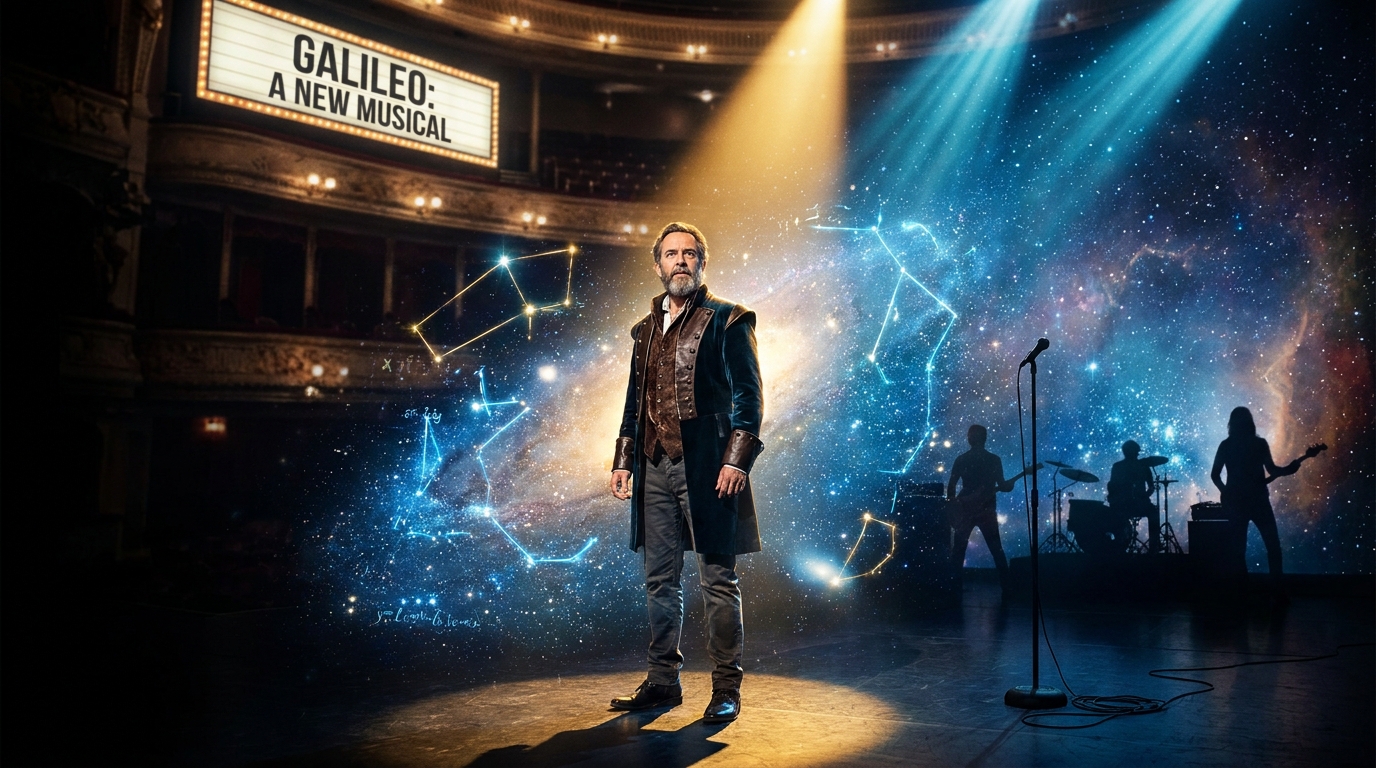
You can feel it when Broadway is playing too safe. Another familiar movie title. Another bit of brand recognition dressed up as an “event.” If you are the kind of theatergoer who wants something smarter without giving up the big chorus, the visual rush and the songs you hum on the subway home, that gets old fast. That is why the Galileo Broadway musical has people paying attention again. Not just because a polished new trailer has put it back in front of audiences, and not just because the Broadway timeline now feels real, but because it seems to be aiming for a tricky sweet spot. It wants to be brainy and crowd-pleasing at the same time. That is harder than it sounds. If the early signals hold, Galileo could become the rare pop-rock musical that treats ideas as part of the spectacle, not a speed bump on the way to the eleven o’clock number.
⚡ In a Hurry? Key Takeaways
- Galileo looks promising because it is selling a high-concept story with pop-rock energy instead of relying on recycled movie nostalgia.
- Watch the trailer, song snippets and visual branding closely. Early materials often tell you whether a new musical understands its audience.
- It is still an unproven Broadway transfer, but the current signals suggest real upside for fans, writers and producers looking for smarter original-stage ideas.
Why this one feels different
The pitch alone stands out. Galileo is not just another title people vaguely remember from a streaming queue or a cartoon they watched as kids. It is built around one of history’s most famous scientific rebels, which means the core conflict already has shape. Truth versus power. Discovery versus control. Curiosity versus fear. Those are big, clean dramatic engines.
Now add pop-rock. Add a marketing package that seems to understand modern attention spans. Add visuals that suggest scale instead of homework. Suddenly, the Galileo Broadway musical starts to look less like a niche prestige piece and more like the kind of crossover show Broadway keeps saying it wants.
That matters because Broadway audiences are not asking for “dumber” work. They are asking for work that does not make intelligence feel like medicine. There is a difference.
The trailer is doing more work than most early coverage admits
A lot of reporting around new musicals gets stuck on names. Who is starring. Who is producing. What theater. What season. Useful, sure, but not enough. The more interesting question is this: what is the actual sales job?
With Galileo, the early materials appear to be selling mood and identity, not just plot. That is a smart move.
It signals tone fast
If you have only a minute or two to win people over, you cannot spend all your time explaining astronomy, church politics and 17th-century Italy. You need to tell viewers what kind of night out this is. The current campaign seems to get that. It points toward urgency, rebellion, glamor and emotional scale.
That is exactly how you make an “intellectual” musical feel accessible. You do not water down the ideas. You frame them through feeling.
It treats science like drama
This is the real trick. Science onstage can die quickly if it turns into lecture theater. But science as obsession, danger and worldview? That sings. Literally. Galileo’s discoveries are not just facts in a textbook. They are actions with consequences. He looks. He sees. He says what he saw. The world pushes back.
That structure is naturally musical because every discovery can trigger a new emotional state. Awe. Doubt. Defiance. Isolation. Triumph. Fear.
It looks built for clips and conversation
Like it or not, musicals now have to survive in tiny pieces before they can win people over in full. A soaring note, a striking costume, a sharp line, a dramatic lighting cue. That is how younger audiences often meet a show first. The Galileo Broadway musical seems aware of that reality. It is not trying to hide its big moments. It is putting them front and center.
Why pop-rock is the right language for this story
There is a reason pop-rock keeps coming back when writers want to make ideas feel immediate. It has momentum. It has lift. It can sound rebellious without needing a history lesson first.
For a story about a man pushing against old systems, that matters. A more classically “worthy” score might have made Galileo feel sealed behind glass. Pop-rock says this fight is still happening. People are still punished for saying uncomfortable truths. Institutions still protect themselves. Public battles over knowledge still get turned into culture wars.
That is how a period story starts to feel current without awkwardly winking at the audience.
What theater fans should watch for next
If you are trying to figure out whether this is real momentum or just polished hype, a few signs matter more than the press release language.
1. Are the songs distinct, not just loud?
Big vocals are not enough. You want to hear whether the score can do more than one thing. Does it have an anthem? A vulnerable character song? A sharp conflict duet? A song of wonder that actually sounds different from a song of rage? If everything hits one volume and one mood, the concept can flatten fast.
2. Does the design world feel specific?
Science and spectacle only mix if the visuals have a point of view. Telescopes, stars and celestial imagery are the easy part. The better question is whether the show creates its own visual language for discovery and persecution. If it does, audiences will remember more than just “it looked expensive.”
3. Is the marketing speaking to nontraditional theatergoers?
This is where a lot of smart shows stumble. They advertise only to the already-converted. If Galileo wants blockbuster status, it has to look inviting to people who love prestige TV, concept albums, historical drama, live concerts and even science content online. Not just regular Broadway buyers.
Why this could matter beyond one show
The bigger story here is not just whether Galileo becomes a hit. It is what a hit like this would tell the industry.
Broadway has spent years chasing familiarity because familiarity feels safer. Existing movie brands. Jukebox catalogs. Revivals with obvious hooks. But “safe” has started to create its own risk. Audiences can sense when a project exists mainly because someone thought it would be easier to sell.
If the Galileo Broadway musical breaks through, it sends a better message. Original framing still matters. High-concept stories can fill seats. Smart material does not need to apologize for itself. And a show can ask something of the audience while still giving them the thrill they paid for.
That is useful information for emerging writers and indie producers. You do not need to strip out the brains from your pitch. You need to package them in a way that promises emotion, scale and clarity.
A practical roadmap hidden inside the hype
Think of Galileo as a test case in product design, but for theater. The product is not just the script or score. It is the full promise made to the audience before opening night.
The promise seems to be:
This will be smart, but not dusty. Big, but not empty. Historical, but not remote. Musical, but not lightweight.
That is a strong promise because it answers the question buyers are really asking before they spend Broadway money: will this feel worth leaving the house for?
When ticket prices are high, “good” is not enough. People want an experience they can defend to themselves and their group chat. Galileo looks like it understands that pressure.
Where the risk still is
Of course, none of this guarantees a great show. Ambition can topple under its own weight. A science-heavy story can still turn talky. A pop-rock score can still blur together. Expensive visuals can still distract from thin characterization.
And Broadway is where promising ideas go to be stress-tested in public. What works in a trailer has to work across two-plus hours, eight times a week, for a paying audience with very little patience for self-importance.
That is why the next round of material matters so much. Full songs. Live performance clips. More detail on how the show balances intimacy and scale. Those will tell us whether Galileo is just well-branded or genuinely built to last.
At a Glance: Comparison
| Feature/Aspect | Details | Verdict |
|---|---|---|
| Source appeal | Uses a famous historical figure and a clear conflict instead of leaning on recycled movie nostalgia. | Fresh and more interesting than the usual safe-IP play. |
| Music and tone | Pop-rock framing can make science, rebellion and emotion feel immediate if the songs have range. | High upside, but the score has to avoid sounding one-note. |
| Commercial potential | Early marketing seems designed for both traditional theater fans and clip-driven social audiences. | Could become a crossover hit if the live execution matches the branding. |
Conclusion
Right now, the most useful way to look at Galileo is not as a finished verdict but as a live test of what Broadway can still become. It has re-entered the conversation with a slick, star-backed trailer and a real timetable, yet a lot of the talk is still stuck at the casting-news level. The more interesting read is in the signals. Tone. Audience targeting. How science is being turned into spectacle. How a “smart” musical is being framed for a TikTok-era crowd without acting embarrassed by its own ideas. That makes the Galileo Broadway musical worth watching even before reviews land. For theater fans, it is a chance to spot the shape of the next big swing early. For writers and indie producers, it is a practical roadmap for selling ambitious material in a market hooked on familiarity. And if it works, it could help push Broadway toward riskier, sharper and more rewarding stories right when the industry needs them most.