Why ‘Oh, Mary!’ Just Became The Template For A Global Cult Musical In 2026
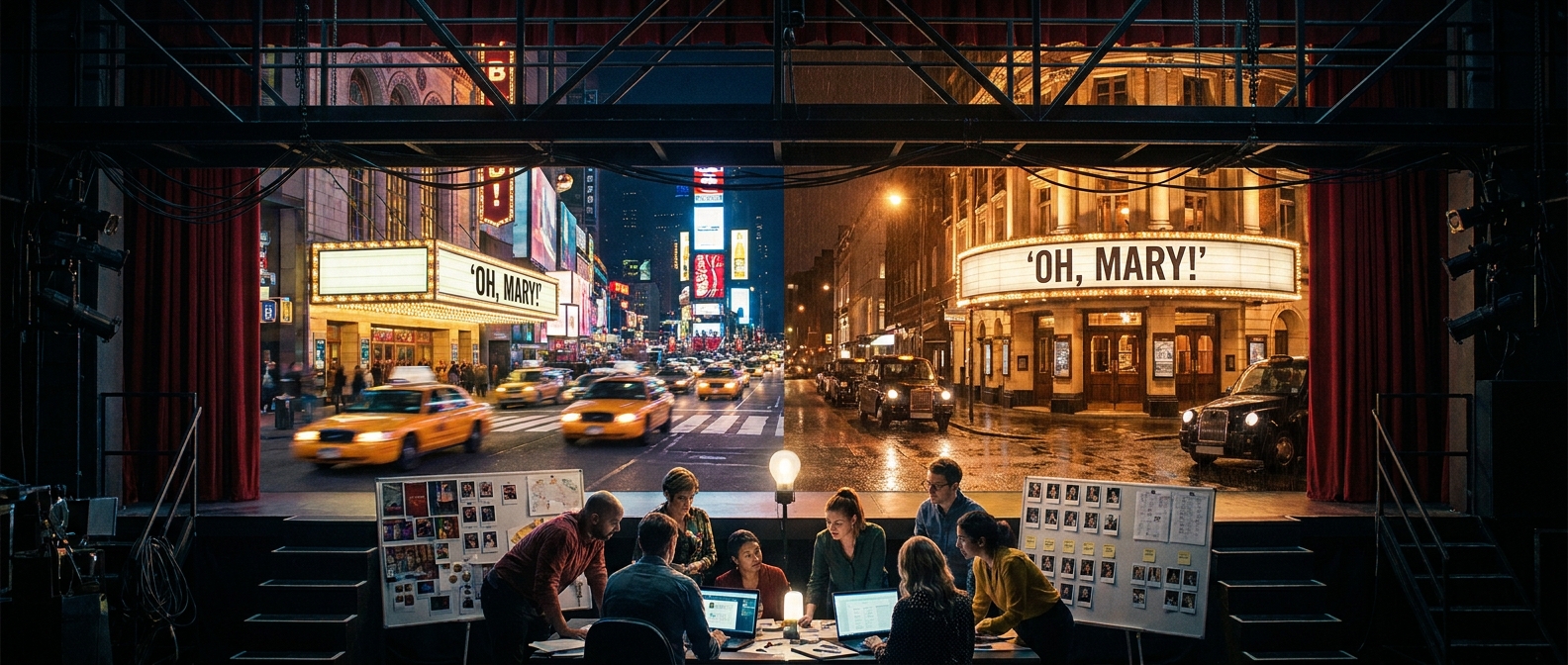
Right now, the loudest Broadway chatter is about who won, who wore what, and which performance “won the night.” That gets old fast if you actually care about how a show breaks through. A lot of theater fans can tell you that Oh, Mary! is a sensation. Fewer can explain why this strange Mary Todd Lincoln comedy has become something much bigger than a hit play with killer buzz. That gap matters. If you are a fan, producer, writer, or just someone who roots for weird art, this is the useful part of the story. Oh, Mary! did not become a 2026 global musical template by accident. It got there by staying specific, making casting feel like an event, expanding at the right speed, and turning scarcity into demand without losing its odd little soul. That is the real lesson hiding underneath the Tonys noise.
⚡ In a Hurry? Key Takeaways
- Oh, Mary! became a global 2026 template because it treated cult appeal like a brand system, not just a Broadway run.
- Watch the sequence. Buzz, smart casting, extension news, international plans, touring, then licensing. Timing is doing half the work.
- For fans and makers, the big lesson is simple. A weird show does not need to become less weird to grow safely. It needs disciplined rollout and clear identity.
Why this show hit harder than people expected
At first glance, Oh, Mary! looks like the kind of downtown-flavored oddball that gets adored by critics, quoted online, and then fades into “you had to be there” legend. That is usually how cult theater works. It burns hot, stays niche, and lives on in memories, bootleg myths, and maybe a cast recording if everyone is lucky.
That is not what happened here.
Instead, Oh, Mary! crossed into something much more durable. It kept the energy of a cult favorite, but it started behaving like a modern entertainment property. Not in a soulless corporate way. In a smart one. The show gave audiences a clear identity, gave the press a clean story, and gave future producers a path to copy.
That is why the search around Oh Mary Broadway global musical hit 2026 makes sense. People are trying to understand the jump from “beloved weird hit” to “international model.”
The real template. Specific first, broad later
The first rule Oh, Mary! got right was one many shows still get wrong. It did not try to please everybody upfront.
It stayed aggressively itself.
The tone was specific. The comic voice was specific. The historical hook was specific. The audience knew exactly what kind of night they were buying. That sounds obvious, but it is important. In a crowded market, vague shows disappear. Specific shows create tribes.
And tribes travel.
Once a show has a tribe, expansion gets easier because people are not just buying a ticket. They are joining a club. They want the reference. They want the line read. They want to say they saw that performer do that scene.
Cult shows used to spread slowly
Before, a cult hit often needed years to build reputation. Regional productions would stack up. Word of mouth would drift. A cast album might keep it alive. Then maybe, eventually, licensing would widen the footprint.
Oh, Mary! compressed that cycle.
It moved from must-see event to cross-market strategy much faster. That speed is a huge part of why it now looks like a 2026 template.
Casting headlines were not side noise. They were the engine
One thing many fans miss is that the so-called “wild casting headlines” were not just fun extras for social media. They were structural. Each casting moment refreshed the show’s urgency.
Think of it like software updates, but for live theater. The product stays recognizable, but every update gives people a reason to talk again.
That matters because theater has a built-in problem. It disappears every night. If a show wants to stay hot, it needs recurring reasons to re-enter the conversation. Oh, Mary! used casting that way.
Why stunt casting worked here
Stunt casting often feels desperate when it is only there to move seats. Here, it felt compatible with the show’s identity. That is the difference.
The production did not slap celebrity names onto a fragile piece and hope for the best. It framed performer changes as part of the event itself. Fans could compare takes. Media could write fresh stories. New viewers who had missed the first wave suddenly had a reason to jump in.
That kept the run alive without making it feel stale.
It expanded like a streaming hit, not an old-school stage run
This is where the 2026 part really comes into focus.
Oh, Mary! was handled less like a single Broadway production and more like a title with multiple release windows. Broadway was the launch. West End expansion became the international proof point. Tours widened access. Licensing opened the door to long-tail life.
That is not the old ladder anymore. It is a coordinated rollout.
Step 1. Broadway created scarcity
Sold-out performances did more than boost grosses. They built status. If you could not get in, the show became more desirable. Scarcity, when real, tells audiences a piece matters now.
That “get in before it is impossible” feeling is gold.
Step 2. Awards season gave it legitimacy
Tonys buzz did not create the hit, but it widened permission. Suddenly people outside the core theater bubble had a simple reason to pay attention. Awards talk gives casual buyers a shortcut. They may not know the material, but they know it is important.
For a show this unusual, that kind of mainstream signal matters a lot.
Step 3. West End plans said, “This is exportable”
Lots of Broadway hits stay domestic in people’s minds. The minute a show extends into London successfully, the market reads it differently. It is no longer just a New York event. It starts to look culturally portable.
That is huge for investors, future presenters, and licensing houses. It says the voice is specific, yes, but not too local to travel.
Step 4. Tours turned obsession into access
A tour announcement does two jobs at once. It reaches new audiences and reassures the existing fan base that the show has legs. Fans outside New York and London stop feeling left out. Local presenters start circling dates. Regional press starts writing previews months in advance.
That keeps the property alive even before the first truck rolls.
Step 5. Licensing locks in the afterlife
This may be the most underrated piece. When a script or musical package moves into licensing while the title is still hot, it changes the math. Schools, regional theaters, and smaller companies do not have to wait for a nostalgic revival cycle. They can start feeding the fandom while the brand is still fresh.
That is how a cult show becomes a living ecosystem.
Why the “cult musical” label means something different now
In the past, “cult musical” often meant beloved but marginal. A little too strange. A little too niche. Important to the people who loved it, but not built for broad commercial life.
In 2026, that definition looks old.
Oh, Mary! shows that cult no longer means small. It means highly legible. A cult work now succeeds when it has a sharp point of view, a meme-friendly identity, strong performance DNA, and a release strategy that keeps introducing it to new circles without sanding off the weird parts.
That is the template.
What other shows should copy
Not the tone. Not the historical absurdity. Not the exact casting style.
They should copy the structure.
- Know exactly what your show is.
- Make every major announcement feel story-worthy.
- Expand only when demand is visible.
- Use international runs as proof, not vanity.
- Open licensing while the title still has heat.
What theater fans can learn from this, too
If you champion new work, this story is useful because it changes how you read success. A cast album is not the whole picture. A Tony win is not the whole picture. A sold-out month is not the whole picture.
Ask different questions.
Look for these signs that a “weird little hit” is becoming a brand
First, are casting changes becoming news on their own? If yes, the title is carrying weight beyond the original company.
Second, are producers announcing extensions and future productions in a sequence that keeps attention rolling? That usually means they are managing demand carefully.
Third, is licensing entering the chat earlier than usual? If yes, they are planning for lifespan, not just awards season.
Fourth, does the show still feel distinct while all this is happening? That is the hardest part, and the one Oh, Mary! handled best.
Why this matters for the next wave of boundary-pushing musicals
This is where the story gets bigger than one title.
Writers and producers have spent years hearing the same warning. If a show is too strange, too tonal, too online, too specific, it will cap its own future. Oh, Mary! is strong evidence against that idea.
The lesson is not “anything weird will work.” Obviously not. The lesson is that clarity beats generic ambition. If a show knows its audience deeply, and if the rollout is paced well, unusual work can move farther and faster than safer material that never gives people a reason to obsess.
The practical lesson for makers
If you are building a project, do not start by asking how to make it broad. Start by asking what your fans will repeat to their friends in one sentence.
Then ask what the second wave looks like.
Then the third.
The team behind Oh, Mary! did not stop at opening night. They planned the chain reaction.
So why did this become the template in 2026?
Because it solved a modern theater problem elegantly.
How do you keep a live show feeling exclusive and expandable at the same time?
Oh, Mary! answered that by making each stage of growth feel earned. Broadway created heat. Awards created validation. casting created recurring spikes. West End plans created global credibility. Touring created access. Licensing created permanence.
Put all that together, and you do not just have a hit. You have a repeatable model.
At a Glance: Comparison
| Feature/Aspect | Details | Verdict |
|---|---|---|
| Identity | The show stayed weird, specific, and easy to describe in one breath. | Major strength. Specificity created loyalty. |
| Expansion Strategy | Broadway buzz led into awards momentum, international plans, touring, and licensing. | Smart and modern. Growth felt coordinated, not rushed. |
| Casting Strategy | Headline-making performer changes kept the title in the news and gave repeat viewers fresh entry points. | Highly effective. Casting became ongoing marketing without feeling random. |
Conclusion
Coming off the 2026 Tony Awards weekend, it is easy to get buried in winner lists, red-carpet photos, and hot takes that evaporate by Tuesday. But the more useful story is this one. Oh, Mary! did not just win attention. It showed how a strange, specific show can dominate Broadway, extend in the West End, line up future tours, and move into licensing while the buzz is still hot. That is why it matters beyond fan excitement. It gives theater lovers and aspiring makers a clearer map for how cult favorites become international brands, how casting announcements and tour timing actually shape demand, and what the next generation of boundary-pushing musicals may need to do to last. If you care about where Broadway is heading, this is the part worth watching. The noise will fade. The model will stick. And for anyone building or backing bold work, that should feel encouraging.