Inside Broadway’s Outsiders Fever: How A Once‑Divisive Book Musical Quietly Became 2026’s Must‑Debated Hit
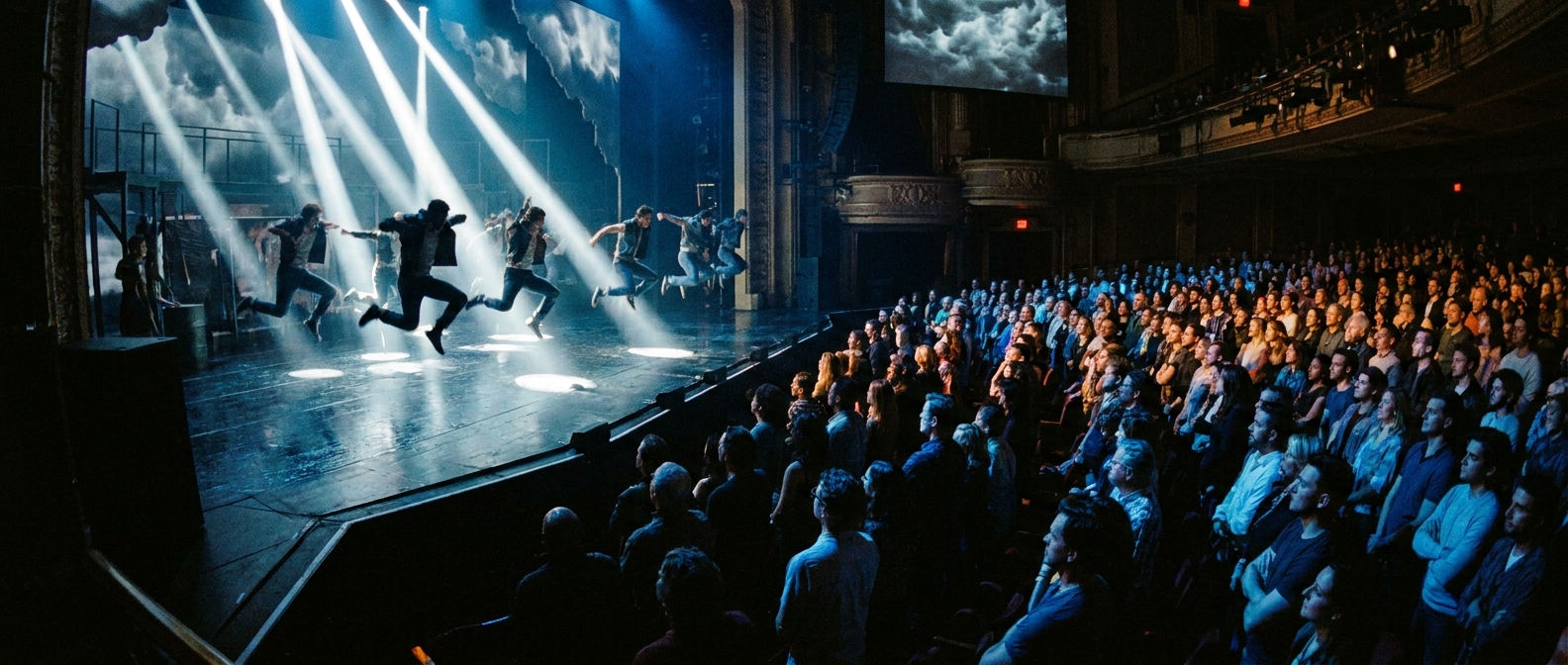
Trying to decide whether The Outsiders is worth your money in 2026 can feel weirdly exhausting. One person calls it a life-changing revival of the book’s raw emotion. The next says it is all smoke, rain, slow-motion rumbling and not enough memorable songs. If you only get a few theatre nights a year, that split is not fun. It makes every ticket feel like a gamble. The truth is that both reactions can be real at once. The Outsiders has quietly turned into one of those rare musicals that people do not just like or dislike. They argue about it. A lot. And that usually means something interesting is going on under the hood. The key is not figuring out whether the buzz is “right.” It is figuring out what kind of show this is, what it does unusually well, and whether those choices match what you personally want from a night at the theatre.
⚡ In a Hurry? Key Takeaways
- The Outsiders earns passionate reactions because it is a mood-first, movement-heavy musical that lands hard for some audiences and leaves others cold.
- If you love cinematic staging, physical storytelling and emotionally direct drama, it is a strong bet. If you mainly want big hummable songs, go in with caution.
- The hype is not fake, but it is not universal either. Treat it as a taste-driven hit, not a guaranteed crowd-pleaser for every theatre fan.
Why this show became such a lightning rod
Most musicals become easy to sort into neat boxes. Big crowd-pleaser. Critical darling. Fan favorite. Tourist pick. The Outsiders does not fit cleanly into any of those.
Its rise has been quieter and stranger. Instead of one simple narrative, it picked up momentum through clips, word of mouth, strong emotional reactions, awards attention, and a lot of online debate. That is how you get a show that keeps showing up on “best thing I have ever seen” lists right next to “I truly do not get it” posts.
That split is central to any honest The Outsiders musical 2026 review. The show is not failing because it is divisive. The division is part of why it has become a must-discussed title.
What people are actually reacting to
1. The stagecraft hits people in the chest
Even many skeptics admit the production itself is striking. The physical staging, the movement, the weather effects, the sense of pressure building in the room, all of that gives the show a force that audiences feel before they fully process it.
For some people, that is enough to tip a good musical into unforgettable territory. They are not only listening to songs. They are watching a whole visual language come alive.
For others, that same strength creates the backlash. When a show’s direction is doing so much heavy lifting, some viewers start asking a fair question. Am I in love with the musical itself, or with the production around it?
2. The score is the biggest fault line
This is where the arguments usually get sharp. Fans hear a score that serves character, tension and atmosphere. Detractors hear songs that support scenes without rising into standalone musical theatre thrills.
That matters because many people buy tickets for different reasons. Some want to leave humming three numbers. Some care more about emotional flow than playlist appeal. The Outsiders tends to please the second group more than the first.
So if your definition of a great musical starts with “I need at least two songs I will replay for months,” that helps explain why your friend’s rave review might not line up with your taste.
3. The source material carries emotional baggage
The Outsiders is not coming in as a blank property. For many people, the book lives in school memories, teen identity, class tension, and that first feeling of seeing young people taken seriously in a story.
That built-in attachment can be powerful. It can also make reactions harsher. If the musical taps into your memory of the novel in the right way, it feels profound. If it misses the version you carry in your head, it can feel oddly distant no matter how polished the show is.
Why 2026 feels louder than the original reaction
Some shows peak during opening year and then settle down. The Outsiders has done almost the opposite. By 2026, the conversation is broader. Touring audiences are meeting it outside New York. More younger fans are discovering it through clips and cast buzz. More traditional theatregoers are finally catching up. And now the reactions are colliding in one big online pile.
That creates noise, but also a clearer picture. The musical is no longer being judged only in the glow of awards season or first-wave fandom. It is being tested by regular audiences with regular budgets, and that is when a show’s real identity starts to show.
The hidden reason the show works for some people and not others
Here is the simple version. The Outsiders often plays more like a felt experience than a conventionally satisfying musical.
That can be a huge plus. Plenty of modern theatre fans love shows that are immersive, textured and emotionally immediate. They do not need every song to stop the show. They want the whole night to build a world.
But if you come from a more classic musical theatre expectation set, where songs define character in big memorable swings and the score is the main event, this one can feel underpowered next to its reputation.
Neither side is wrong. They are just measuring different things.
What the superfans are seeing
People who put The Outsiders in their personal top ten usually point to a few things.
- The sense of urgency in the staging.
- The earnestness. It is not trying to be snarky or cool from a distance.
- The physical commitment of the cast.
- The way the production treats teen emotion as serious, not cute.
- The cumulative effect. Scene by scene, it can sneak up on you.
That last point matters. This is not always a show people admire in a tidy, intellectual way. It gets them emotionally. Once that happens, they tend to defend it fiercely.
What the doubters are seeing
The criticism is not hard to understand either.
- Some find the score respectable rather than thrilling.
- Some think the production style creates a lot of intensity without enough musical payoff.
- Some feel the adaptation smooths out rough edges that made the original story sting.
- Some simply do not connect with the current level of internet canonization around it.
That is why doom posts and rave posts can both sound so confident. They are watching the same show, but valuing completely different parts of it.
How to tell if it is a good ticket for you
Go if you want this
Book the ticket if you like muscular staging, strong ensemble storytelling, young characters treated with real weight, and a show that aims for emotional immersion over neat polish.
You are also a strong match if you tend to love theatre moments that make the room hold its breath, even if you cannot hum every song the next morning.
Pause if you want this
Think twice if your favorite musicals live or die by the score, or if you get impatient with productions that are more atmospheric than tuneful. You may still admire parts of it, but admiration is not the same as loving the whole package.
If your budget is tight, this distinction matters. There is no shame in wanting a surer thing for your one big night out.
So is the hype real?
Yes. But “real” does not mean universal.
The best way to think about The Outsiders in 2026 is this. It is a genuine hit, just not a simple one. The enthusiasm is not invented by social media. People really are having intense experiences with it. But the backlash is not fake either. It is the natural response to a show whose strongest assets are not the assets every musical lover prizes most.
That is why a grounded The Outsiders musical 2026 review has to resist two easy traps. It should not pretend the show is flawless because the fan energy is huge. And it should not dismiss that fan energy just because some people leave unconvinced.
What this says about modern musical theatre
The bigger story here is that audiences are getting more comfortable with shows that do not win the old-fashioned way. A musical does not need to produce a stack of instant standards to dominate the conversation. Sometimes it wins because it creates a world people cannot stop arguing about afterward.
The Outsiders is a strong example of that shift. It is not beloved because everyone agrees on it. It is beloved, and resisted, because it pushes right into the spot where craft, memory, taste and online culture all meet.
At a Glance: Comparison
| Feature/Aspect | Details | Verdict |
|---|---|---|
| Staging and visuals | Physical, cinematic, emotionally forceful, often the element audiences remember most | Major strength |
| Score and songs | Effective in context, but not always full of instant earworms for every listener | Most divisive area |
| Best fit audience | Viewers who want emotional intensity, strong ensemble work and atmosphere over pure singalong appeal | Excellent match for the right taste |
Conclusion
If you have felt whiplash trying to decode the internet’s opinion on The Outsiders, you are not imagining it. This is one of the noisiest musicals in the conversation right now because it really does land very differently depending on what you want from theatre. Some touring audiences are ranking it among the best things they have ever seen. Others walk out wondering what all the shouting was about. A little context helps. This is not a simple “masterpiece or flop” situation. It is a taste-driven hit with striking production values, real emotional pull, and a score that divides smart people in good faith. Once you see that, the ticket decision gets easier. You do not need to follow Tony buzz, superfans or doom posts. You just need to know your own habits as a theatre-goer, and whether this show’s strengths are the ones that matter most to you.