Inside Broadway’s ‘Paranormal Activity’ Frenzy: How A Found‑Footage Horror Hit Just Became 26/27’s Most Risky Must‑See
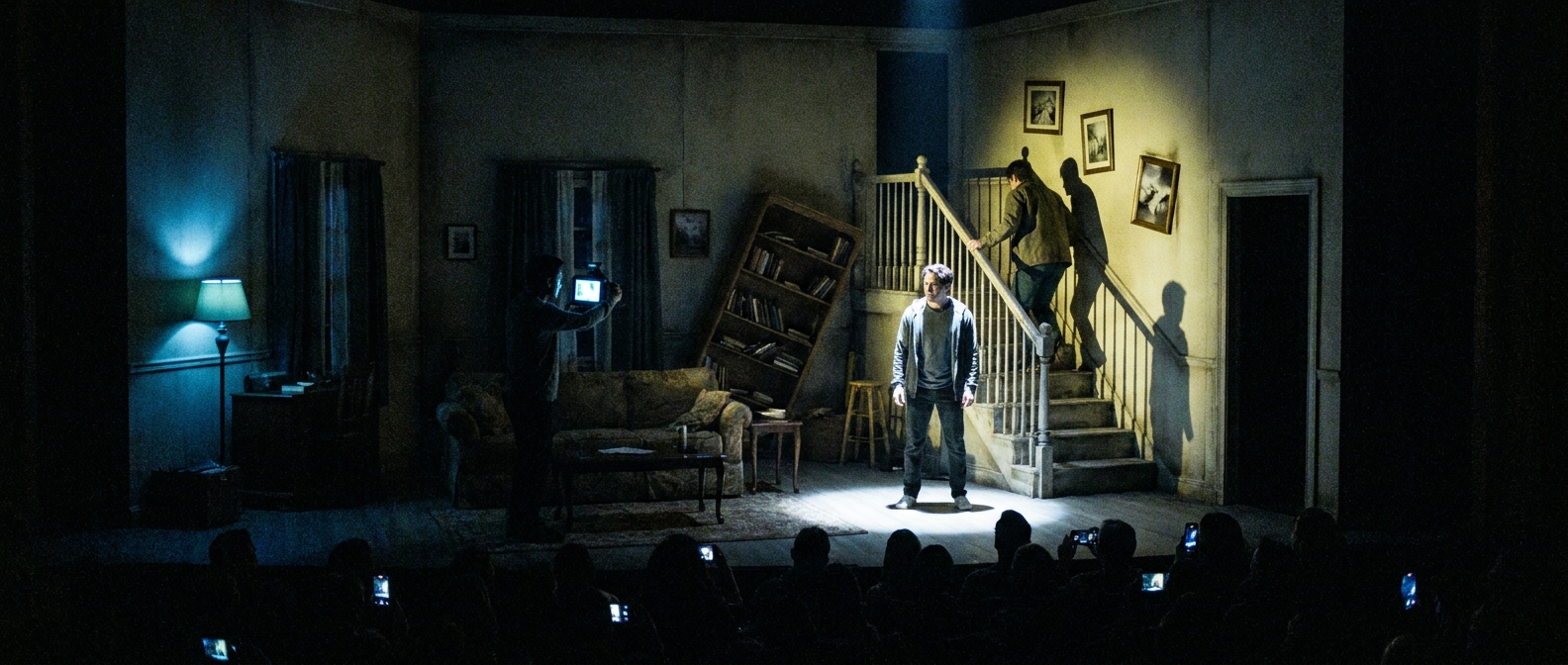
People are tired of guessing. Theater fans keep hitting refresh, watching clips, reading rumors, and asking the same question. Is the Paranormal Activity Broadway horror musical a real turning point, or just a flashy stunt wearing a familiar movie title? That frustration makes sense. Broadway has trained audiences to be skeptical whenever a big film brand shows up with a strange new format, especially when that format is horror, and especially when that horror is supposed to sing.
What makes this one different is timing. As the first official musical announced for the 2026/27 Broadway season, it is landing under a microscope. Every design choice, every audience reaction, every bit of social chatter now feels bigger than one show. For fans, it is a test of whether Broadway can still surprise people. For producers and indie creators, it is a live case study in how far you can push IP, sound design, stage tech, and shared audience fear before the whole thing either clicks or collapses.
⚡ In a Hurry? Key Takeaways
- Paranormal Activity on Broadway matters because it is testing whether horror, found-footage language, and a major film title can work together in a live musical.
- If you make theater, watch how the show uses sound, pacing, point of view, and audience tension. Those are the useful lessons, even if the final product divides people.
- The big value here is not just box office buzz. It is seeing, in real time, how far Broadway audiences will go with genre mixing before the concept stops feeling fresh.
Why this show has people so worked up
The title does a lot of heavy lifting. Paranormal Activity is not some obscure property with a built-in theater crowd. It is a horror brand tied to dread, jump scares, home-video realism, and that very specific found-footage feeling that something bad is happening just off-camera.
That is exactly why people are obsessed. Turning that into a musical sounds, on paper, either brilliant or ridiculous. Sometimes both.
Broadway has adapted movies forever. That part is not new. What feels risky here is the collision of forms. Horror asks for tension, uncertainty, and loss of control. Musicals often ask for release, rhythm, and emotional clarity. Found footage adds another problem. It depends on cameras, framing, and the idea that you are watching evidence.
So the real question is not, “Can a movie become a musical?” Broadway already answered that years ago. The question is, “Can this kind of movie become this kind of musical without losing the thing people came for?”
What makes the Paranormal Activity Broadway horror musical different from a normal adaptation
It is selling atmosphere before plot
Most film-to-stage adaptations sell recognizable scenes, songs, and big emotional moments. This one has to sell a mood first. If the audience does not feel watched, uneasy, or slightly unsafe in the room, then the brand promise breaks almost immediately.
That changes the whole job of the creative team. Sets matter, sure. But sound may matter more. Silence may matter most of all.
It depends on audience psychology
Horror in a theater is not the same as horror on your couch. At home, you can pause, lower the volume, check your phone, or look away. In a Broadway house, the fear becomes social. You hear other people gasp. You feel the room tighten. You sense when a scare is coming, but you cannot fully escape it.
That shared tension is the opportunity. It is also the risk. If the audience starts laughing at the wrong moments, or if a scare feels too mechanical, the mood can fall apart fast.
It has to justify the IP, not just use it
This is where producers and writers should pay close attention. Big IP gets you attention. It does not get you trust. If people feel the title was slapped onto a half-formed idea, backlash comes quickly. Fans are much harsher now about brand extension that feels hollow.
That is why early chatter around this production matters so much. If you want the broader context for how fast this title took over the season conversation, it is worth reading Inside Broadway’s ‘Paranormal Activity’ Shock Opening: How A Horror Film Franchise Just Hijacked The 2026–27 Season Before It Even Began. The piece gets at the same core anxiety fans are having right now. Is this real momentum, or just noise?
What the first weeks can teach creators, even if the show ends up divisive
You do not need the production to become a masterpiece for it to be useful. Sometimes the most valuable Broadway experiments are the messy ones, because they show the whole industry where the edges are.
Lesson 1: Sound is not background anymore
For horror onstage, sound is story. Tiny shifts in room tone, footsteps, low-frequency rumble, mic texture, and directional audio can do more than a giant visual effect. A smart horror musical uses sound the way thrillers use camera movement.
For emerging creators, that is a practical takeaway. You do not need a blockbuster budget to build dread. You need control. You need restraint. And you need to know when not to fill every second with music.
Lesson 2: Point of view may be the whole game
Found footage works because of perspective. You are not seeing everything. You are seeing enough. The stage version has to create that same feeling somehow. Maybe through live-feed video. Maybe through partial visibility. Maybe through blocked sightlines, light cues, or characters who are always one beat behind what the audience suspects.
If the production solves that elegantly, other creators will copy the technique fast. If it does not, that failure is still useful. It tells you that not every screen grammar transfers cleanly to a proscenium house.
Lesson 3: Horror songs need a different job
A horror musical cannot stop the tension every ten minutes for a standard “I want” song that explains everything. If it does, fear drains out of the room. Songs here have to deepen obsession, denial, paranoia, or ritual. They need to make the audience feel trapped inside a state of mind, not simply informed.
That is a big writing lesson for anyone making genre theater. Your songs do not just express feeling. They shape what kind of pressure the scene can hold.
Is this a game-changer or just a stunt?
Right now, the honest answer is both are still on the table.
The “stunt” argument is easy to understand. A famous horror title on Broadway creates instant headlines. People who would never normally discuss orchestrations or stagecraft are suddenly talking about Broadway. From a marketing point of view, that is gold.
But a stunt usually burns out once the joke is clear. A game-changer does something more important. It gives the industry a new tool, a new audience habit, or a new permission structure.
If Paranormal Activity proves that mainstream Broadway crowds will show up for hard genre work, not just softened family-friendly versions of it, then the impact could be much bigger than one season. That would tell investors that horror, thriller, sci-fi, and stranger hybrids are not side bets anymore. They are viable center-lane projects.
What fans should watch for instead of just reacting to hype
Hype is loud, but it is not always useful. If you are trying to figure out whether this production actually matters, watch a few specific things.
Watch the audience behavior
Are people leaning in or checking out? Are they nervous in a good way or restless in a bad way? Shared silence in a theater can tell you more than applause volume.
Watch whether the show earns its scares
Cheap scares can get a reaction once. Earned dread can carry a full evening. If the production depends too much on surprise and not enough on atmosphere, that usually shows up pretty quickly in word of mouth.
Watch whether the musical form adds something
This is the key test. If the songs, score, and live staging only repeat the movie’s brand identity, then the adaptation is thin. If they reveal something the original format could not, then now you are talking about real theatrical invention.
What this means for producers and indie makers
If you are building your own project, the useful question is not “Should I adapt a horror IP?” It is “What pressure is this experiment putting on the rest of us?”
Here are the practical implications.
Big brand names still open doors, but they also raise the standard
Recognition can get attention. It can even get pre-sales. But audiences are getting better at spotting lazy concept packaging. If you use a known property, you need a real reason it belongs onstage.
Genre purity matters less than execution
Broadway audiences are more flexible than gatekeepers sometimes assume. They will follow weird mixes if the rules are clear. Horror plus musical is not the problem. Sloppy tone is the problem.
Tech works best when it supports a feeling
Projection, live camera feeds, practical effects, immersive audio, and lighting tricks can help. But if the audience starts admiring the machinery instead of fearing the world of the show, the spell breaks. The best tech is the tech people feel before they notice it.
At a Glance: Comparison
| Feature/Aspect | Details | Verdict |
|---|---|---|
| Brand Recognition | The Paranormal Activity name brings instant curiosity, press attention, and built-in expectations from horror fans and Broadway skeptics alike. | Strong draw, but only helpful if the stage version earns the title. |
| Horror on a Live Stage | The show has a chance to use shared audience tension, sound design, silence, and limited visibility in ways film cannot copy exactly. | High risk, high upside if the atmosphere holds. |
| Future Industry Impact | Its early reception could shape how producers think about horror musicals, experimental IP adaptations, and tech-heavy genre work on Broadway. | Potentially bigger than the show itself. |
Conclusion
That is why the Paranormal Activity Broadway horror musical is worth watching so closely. It is not just another adaptation trying to squeeze a known title into a new market. It is a real-time test of how far Broadway is willing to push genre, stage tech, and brand recognition right now. By paying attention to what this show is trying in its first weeks, the Legend The Musical community gets something more useful than gossip. You get practical lessons in future-proof staging tricks, audience psychology around fear in a shared room, and the limits of stretching IP before it snaps. Whether the production becomes a hit, a cautionary tale, or something in between, it can still help writers, directors, designers, and fans see the next phase of Broadway more clearly. And if it works, even partly, it may quietly expand what people think a Broadway musical is allowed to be.