Inside CATS: The Jellicle Ball’s Wild Broadway Reinvention: How A Club‑Style Revival Just Crashed The 2026–27 Hype List
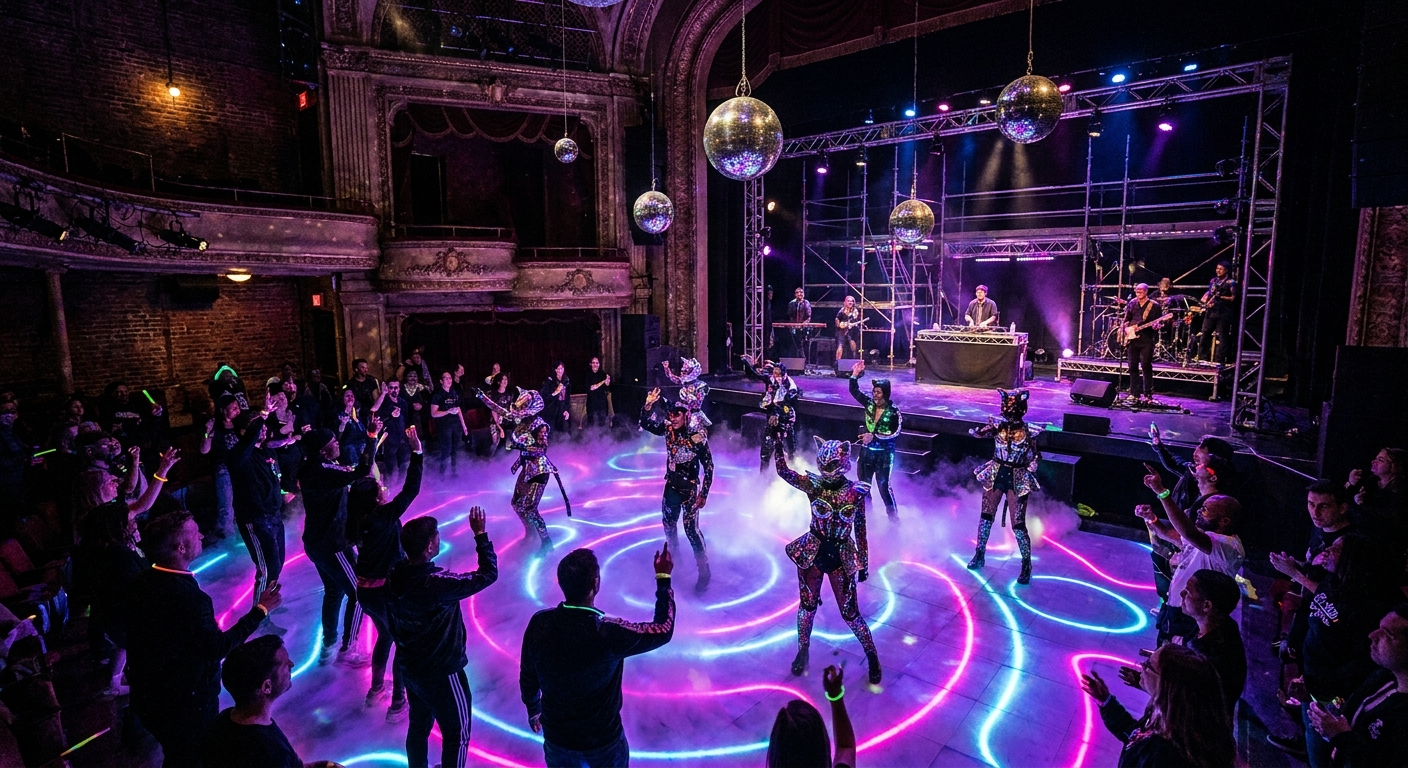
If you are exhausted by the endless Broadway hype carousel, you are not alone. Every week brings another splashy title, another familiar brand, another casting drop built to dominate group chats for 24 hours. What gets lost is the more useful question. Which shows are actually trying something new with the form? That is why CATS: The Jellicle Ball matters. The buzz is not just about putting Andrew Lloyd Webber’s cat musical back on the board. It is about turning a famously strange mega-hit into a club-charged, immersive event that treats the audience less like seated observers and more like guests at a midnight scene. For fans, artists, and producers, that shift is the story. The real lesson is not “remember CATS?” It is “here is how an old property can be rebuilt to feel alive, risky, social, and current without pretending it was written yesterday.”
⚡ In a Hurry? Key Takeaways
- CATS The Jellicle Ball Broadway immersive musical looks less like a stunt and more like a smart blueprint for reviving old material through space, movement, and audience energy.
- If you make theatre, steal the method, not the logo. Rebuild the room, adjust the audience flow, and let choreography shape the story before you touch the script.
- The value here is practical. This kind of revival can pull in younger crowds and fresh press without the cost of inventing a new brand from scratch.
Why this version of CATS stands out
Most revivals promise “a bold new take.” Usually that means a new coat of paint, some moodier lighting, and a press release full of big claims. CATS: The Jellicle Ball feels different because the concept changes the basic operating system of the show.
Instead of asking audiences to revisit CATS as a museum piece, this production frames it as an event. A party. A scene. A place you enter. That matters because CATS has always been more physical than literary. It runs on sensation, rhythm, character walks, group movement, image, and vibe. A club-style reinvention does not fight the material. It uses what was already there.
That is why the idea has grabbed so much attention in the middle of the 2026 to 2027 hype wave. While everyone is looking at giant titles and film tie-ins, this is the experiment with lessons people can actually use.
What “immersive” really means here
“Immersive” gets thrown around so often it can mean almost nothing. Sometimes it just means actors enter through the aisle. Sometimes it means there are two standing tickets and a neon sign in the lobby. For a CATS The Jellicle Ball Broadway immersive musical to matter, the room itself has to help tell the story.
It changes audience behavior
A traditional proscenium setup tells you to sit still, face forward, and receive. A ball or club setup suggests something else. You watch people. People watch you. Energy moves sideways, not just front to back. That makes a huge difference for a piece like CATS, where status, display, challenge, and belonging are baked into the DNA of the evening.
It turns dance into plot
In a normal revival, choreography is one department among many. In this model, choreography becomes the traffic system of the whole night. It tells you where to look, when to lean in, when to feel the room heat up, and when a character has seized focus. That is not decoration. That is narrative control.
It makes spectators feel invited, not assigned homework
This is one reason younger audiences may click with the show. They are not being asked to honor a sacred classic from 1981. They are being offered a social, sensory night out. That lowers the intimidation factor without dumbing anything down.
Why CATS was oddly perfect for this treatment
People joke about CATS because its plot is famously loose. But looseness can be a strength when you are rebuilding a show for a new kind of room. CATS is already modular. It is a collection of entrances, turns, solos, alliances, and showdowns held together by atmosphere and ritual.
That means a reinvention can move pieces around without destroying the whole machine. A more book-driven musical would break faster under this kind of pressure. CATS can absorb it. In fact, it may work better when the production stops apologizing for its weirdness and starts using it as fuel.
The craft lesson hiding inside the buzz
The useful part is not “put every old musical in a nightclub.” The useful part is seeing how form can solve problems that marketing cannot.
Problem: Legacy titles can feel embalmed
Fix: Change the frame, not just the costumes. Move the audience into a setting where the original material has new social meaning.
Problem: Younger audiences want event value
Fix: Build a show that feels shareable because the experience is vivid, not because the ad campaign begs for selfies.
Problem: Revivals often copy the memory of a hit instead of rethinking the engine
Fix: Identify what the piece actually runs on. For CATS, that is movement, persona, music, and ritual space. Then rebuild around those strengths.
Design choices that likely do the heavy lifting
Even if you never set foot in the venue, you can learn a lot by looking at the production logic.
1. Room layout as storytelling
If the audience is arranged more like guests at an event than ticket holders in rows, the show gains tension instantly. Who is close to the action? Who gets circled? Who feels pulled into the collective pulse? These are design questions, but they also shape emotion.
2. Costumes that read at club distance
A club-style CATS needs looks that land up close and in motion. That usually means silhouette, shine, texture, makeup detail, and character coding you can read in half a second. It is less about realistic feline illusion and more about identity broadcast.
3. Lighting that behaves like music
In a conventional musical, lighting supports scenes. In a ball or nightlife environment, lighting can feel like a scene partner. It can signal status changes, isolate challenge moments, and create communal release. That is especially helpful in a show where emotion often arrives through rhythm and image before text.
4. Sound that wraps, not just projects
An immersive or semi-immersive production lives or dies on sound placement. If the room feels sonically flat, the whole illusion weakens. But when bass, vocals, and crowd energy feel shared, the audience stops watching from outside and starts living inside the show’s logic.
How choreography becomes the star system
One of the smartest things this kind of revival can do is treat choreography as the main way characters gain power. In a club setting, that reads instantly. Who commands attention? Who takes up space? Who interrupts the flow? Who earns the circle?
That makes CATS feel surprisingly current. Modern audiences understand social rank through movement. They understand entrance energy. They understand the difference between someone merely appearing and someone taking over a room.
For directors and choreographers, that is a huge takeaway. If your material has thin exposition but strong physical language, lean harder into the body. Stop trying to explain everything with added dialogue.
Is it gimmicky? Sure, a little. That is not a disqualifier.
Broadway people sometimes use “gimmick” as a conversation stopper. But every strong theatrical frame can sound gimmicky when reduced to one sentence. “Shakespeare in modern dress.” “Company with a gender swap.” “Cabaret in the round.” The better question is whether the concept reveals something true about the material.
Here, the answer looks like yes. CATS has always been about tribe, display, ritual, erotic charge, and public performance. A ball or club-inspired treatment does not paste an alien concept onto it. It gives those elements a social container contemporary audiences instantly get.
What working artists can steal right now
You do not need Andrew Lloyd Webber money to use the lesson.
Start with audience flow
Ask how people enter, where they gather, what they see first, and whether the room encourages passivity or participation. Tiny changes can reset the whole tone of a piece.
Build your concept around the show’s natural strengths
Do not force immersive staging onto a script that needs quiet, linear focus. But if your piece lives through music, movement, and ensemble heat, think beyond the standard stage picture.
Use design to shorten the distance between performer and spectator
That can mean thrust staging, promenade sections, onstage seating, pre-show interaction, or a reworked lobby that extends the world. “Immersive” is not binary. You can scale the idea.
Think like a host, not just a director
What kind of night are you inviting people into? A competition? A communion? A party? A wake? Once you answer that, the design and pacing get clearer fast.
What fans should watch for when the buzz gets loud
Hype can flatten everything into “must-see” or “overrated.” Try a better checklist.
Does the concept fit the show?
If yes, you will feel the production and material talking to each other, not arguing.
Does the room change your relationship to the music?
If yes, the revival is doing real work, not just changing costumes and calling it radical.
Does the audience act different?
That is one of the clearest signs that a form experiment is real. If people lean in, react physically, and feel socially present, the production has changed more than the set.
Why this matters more than another mega-title announcement
Big-ticket projects will always eat headlines. They are easier to explain. Everyone already knows the title. But form innovation often starts in places that sound weird on paper. That is where artists test what today’s audience actually wants from live performance.
CATS: The Jellicle Ball matters because it asks a practical question Broadway needs to answer more often. How do you make a known property feel dangerous again? Not fake-dangerous. Not “edgy” in a marketing deck. Actually alive.
The answer here seems to be: stop treating the show as a relic and start treating it as a live social machine.
At a Glance: Comparison
| Feature/Aspect | Details | Verdict |
|---|---|---|
| Concept fit | A club and ball framework matches CATS’ built-in obsession with ritual, status, movement, and spectacle. | Strong fit. More revealing than random. |
| Audience experience | The immersive setup can turn passive viewing into social participation and make the night feel event-driven. | High value for younger and repeat audiences. |
| Usefulness to the field | Offers clear lessons in room design, choreography-led storytelling, and revival strategy for known titles. | One of the more practical case studies in current Broadway buzz. |
Conclusion
Today the chatter is all about big-ticket titles like Purple Rain and Paddington, but the most actionable innovation for working artists and plugged-in fans is hiding in the way CATS: The Jellicle Ball is reframing a warhorse as a late-night, sweat-in-your-costume party. That is why this is more than a novelty item on the 2026 to 2027 list. By paying attention to the room, the choreography, the visual language, and the audience flow, you can see a real blueprint for how old material gets new life. That is useful whether you are directing a showcase, producing a revival, designing a black-box experiment, or just trying to understand where musical theatre may be heading next. The best part is that the lesson is portable. Look past the brand name, study the craft, and you have something far more valuable than hype. You have ideas you can use right now.