Inside ‘E=MC²’ In Glendale: How An Einstein Megamusical Just Became 2026’s Smartest New Cult Bet
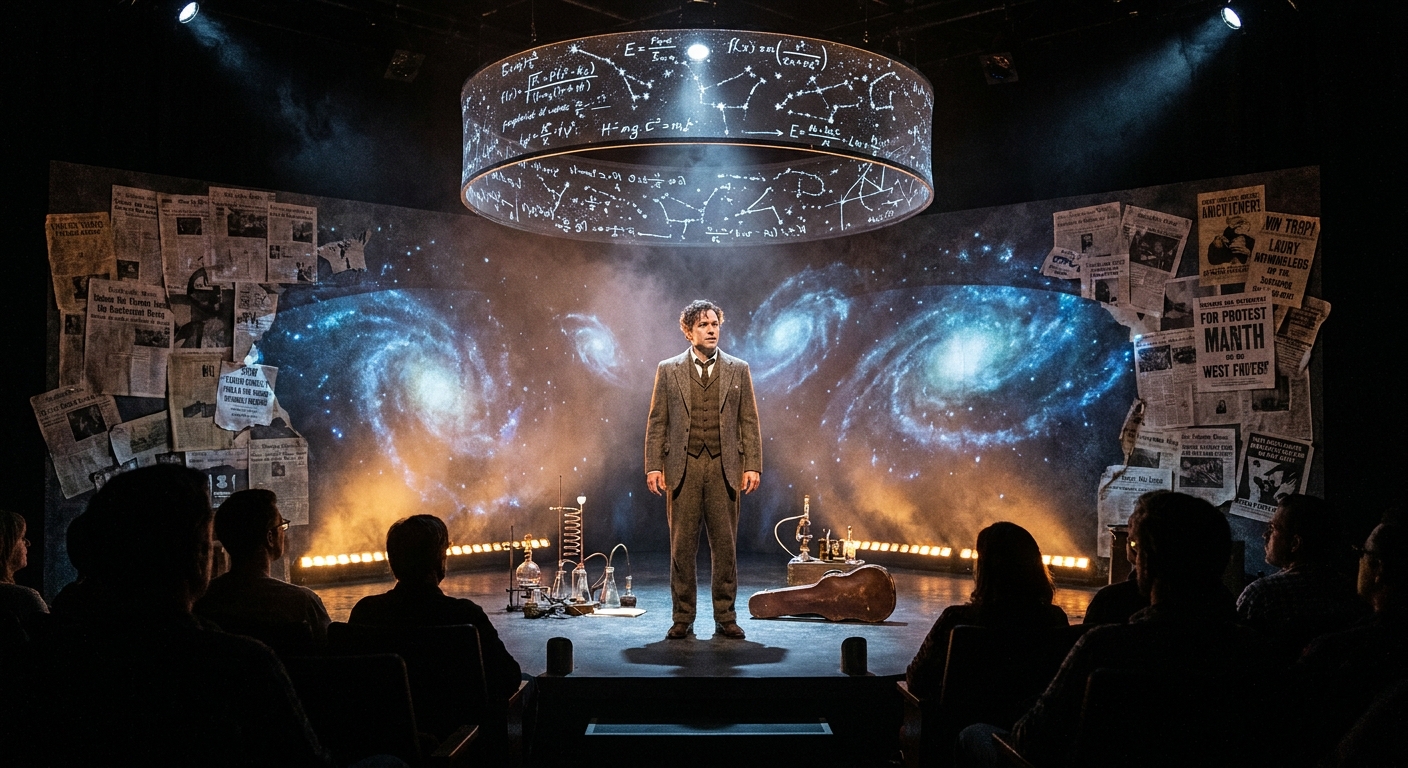
If you are tired of doom-scrolling the same few Broadway titles and asking where the next real event musical is hiding, you are not alone. A lot of theatre fans want something original, emotionally big, and ambitious enough to justify flights, hotels, dinner reservations, and the hard sell to friends who only go to one show a year. That is exactly why the E=MC2 musical Glendale world premiere suddenly matters. This is not another movie adaptation with built-in brand recognition doing the heavy lifting. It is an original musical about Albert Einstein that seems to be aiming for something much larger than a classroom-history piece. The team has started putting new demo material into the world, and that is usually the moment when a project stops being a rumor and starts becoming a real contender. If you like getting in early on a show before the internet decides what you are supposed to think about it, this is one to watch now.
⚡ In a Hurry? Key Takeaways
- The E=MC2 musical Glendale world premiere looks like one of 2026’s most intriguing original musical bets, with a serious creative push behind it and demos that suggest real scale.
- If you are curious, listen to the released demo material now and track casting, workshop talk, and ticket timing before opening buzz drives the conversation.
- This is valuable not just for fans planning a trip, but for artists and superfans who want a front-row view of how an original musical is built and sold from the ground up.
Why theatre people are suddenly paying attention
There is a very specific kind of excitement that starts when a new musical feels odd on paper but right in your gut. Albert Einstein as the center of a large, emotional stage musical could have gone wrong in a dozen boring ways. It could have turned into a school assembly with better lighting. It could have been all equations and no pulse.
Instead, the early positioning suggests the opposite. The show appears to be aiming for a human story first, then using science, history, love, exile, politics, and public myth to give that story weight. That is a much smarter lane.
When people compare a project like this to the kind of reframing that made Hamilton feel fresh, they are not saying the shows are identical. They are saying the creators seem to understand the trick. Find the human pressure points inside a famous historical figure. Then make the audience feel the cost of genius, ambition, compromise, and consequence.
What E=MC2 seems to be selling, beyond the title
The title gets attention because everyone knows the equation. That is the easy part. The harder part is making audiences care about the person attached to it.
From the demos now circulating, the pitch seems to be less “come learn physics” and more “come watch a brilliant, flawed man move through a century that keeps demanding more from him than any one person can safely give.” That is a much better hook.
It also gives the musical several entry points for non-theatre people. Maybe your friend does not care about Broadway gossip. Fine. They might care about World War history, political exile, celebrity culture, or complicated love stories. A show like this can use all of those doors.
That matters for travel decisions
If you are deciding whether a regional or pre-Broadway style launch is worth the money, tone matters a lot. You are not just buying a seat. You are buying a chance to see a show before it gets polished, argued over, and flattened into discourse.
That is why these demos are useful. They give a first real sense of whether the piece has sweep, whether it has intimacy, and whether the writers know the difference between “important subject” and “good theatre.”
Why the Glendale world premiere is the real story
World premieres are where the most interesting theater often lives. Not because every new show is great. Plenty are messy. But messy can be exciting when you are seeing a team take a real swing.
The E=MC2 musical Glendale world premiere has that “catch it before everyone else decides what it is” energy. If the musical lands, people will later talk as if its success was obvious. It rarely is. The first production is where the risks are easiest to spot.
That makes Glendale more than a location pin. It is part of the appeal. You get to see how the material breathes in front of an audience. What gets applause. What drags. What song suddenly becomes the one everybody talks about in the parking lot.
Original musicals need this kind of close watch
Adaptations sell themselves faster. A title from a hit movie or familiar catalog already has a built-in explanation. Original musicals have to do more work. They need to build trust song by song, image by image, clip by clip.
That is why early demo releases are not just marketing fluff. They are diagnostic tools. They tell you whether the team has a sound, a point of view, and enough confidence to let the material speak before full production elements do the seducing.
What the new demos actually tell us
The biggest thing the demos do is answer the basic fear: is this going to be dry? Early signs suggest no.
They seem designed to communicate scale and feeling at the same time. That is a promising combination. You want songs that can carry ideas, yes, but also songs that can survive outside the context of a plot summary. If listeners can hear one track and think, “I need to know what scene this comes from,” that is a good sign.
Demos also reveal confidence. A team that releases them is saying, in effect, “here is the material in a form raw enough that you can judge the bones.” That does not guarantee greatness. But it does show the creators are inviting people into the build process rather than hiding behind concept art and vague promises.
Listen for these three things
First, listen for character voice. Does Einstein sound like a person, not a symbol?
Second, listen for musical identity. Can you tell this score apart from every other “serious new musical” trying to sound respectable?
Third, listen for conflict. Not just sadness or grandeur. Conflict. Good musical theatre lives on decisions under pressure.
Is this actually worth planning a trip around?
Maybe. And that is already more interesting than most early announcements.
If you are the kind of fan who likes polished sure-things only, you may want to wait for reviews, audience chatter, and maybe a cast recording down the line. There is no shame in that. Travel is expensive.
If you like being early, though, this has the right ingredients. It is original. It has a recognizable hook. It appears to be reaching for scale. And the wider public has not fully clocked it yet.
That last part matters more than people admit. Once a show becomes discourse, everyone starts arriving with preloaded opinions. Seeing it before that stage can be more fun, more honest, and more revealing.
Who should seriously consider going
Fans who loved getting in on shows before they became impossible tickets.
Artists who want to study how creators turn a brainy subject into emotional theater.
Travelers who do not mind a little uncertainty if the payoff is discovering something first.
Why a science-driven musical could work better than people expect
Non-theatre people sometimes hear “Einstein musical” and picture a worthy lecture with a finale. But science, onstage, is often just a frame for bigger human questions. What does obsession cost. How does public fame distort private life. What happens when your ideas outgrow your control. Those are not niche questions.
In plain English, this show does not need the audience to understand physics in detail. It needs them to understand hunger, fear, romance, ego, regret, and moral pressure. That is familiar ground. The science gives the piece flavor and stakes. The human story has to do the heavy lifting.
If the creative team gets that balance right, the subject could actually become a strength. It gives the musical a hook no generic original drama has, while still leaving room for big emotions.
How to track the show smartly, without getting lost in hype
If you want to follow the E=MC2 musical Glendale world premiere like a pro, keep it simple.
1. Start with the demos
Do not wait for other people to summarize them for you. Listen yourself. You will learn more in ten minutes of music than in fifty social posts repeating each other.
2. Watch for casting and creative updates
New musicals often reveal themselves through who signs on. A casting choice can tell you whether the team is chasing prestige, vocal fireworks, movie-star visibility, or something more grounded.
3. Pay attention to language in the marketing
If the campaign keeps talking only about Einstein the icon, be cautious. If it starts talking more about relationships, moral conflict, urgency, and personal cost, that is usually healthier. It means they know audiences need drama, not just a famous face with a formula attached.
4. Decide early what kind of audience member you are
Do you want to see version 1.0 and accept rough edges? Or do you want to wait for transfer rumors and tightening? Both are valid. The key is not pretending those are the same experience.
At a Glance: Comparison
| Feature/Aspect | Details | Verdict |
|---|---|---|
| Concept | An original musical built around Albert Einstein, blending biography, science, politics, and personal drama. | High-risk, high-interest. Far fresher than another familiar adaptation. |
| Early Material | New demos offer an early sense of tone, ambition, and musical scale before full production buzz takes over. | Promising. Worth hearing now if you want your own first impression. |
| Travel Value | The Glendale world premiere gives fans a chance to catch the show’s first public shape, with all the excitement and uncertainty that comes with it. | Best for adventurous theatregoers who enjoy discovering work early. |
Conclusion
E=MC2 is sitting in that rare sweet spot where insiders are already looking closely, but the wider audience has barely noticed yet. That is exactly when a new musical is most interesting. The team is clearly trying to turn Albert Einstein’s life into something muscular, emotional, and issue-driven, not just respectable. The newly released demos help because they let you hear the show’s actual tone before the internet flattens it into hot takes. If you are a fan wondering what might be worth a trip next year, this is one to keep on your short list. And if you are an artist, a student of theater, or just someone who likes watching risk happen in real time, the E=MC2 musical Glendale world premiere could be a live masterclass in how an original show gets built, tested, and maybe turned into the next cult obsession.