Inside ‘I’m Every Woman’: How The Chaka Khan Musical Just Became 2026’s Loudest Word‑Of‑Mouth Hit In London
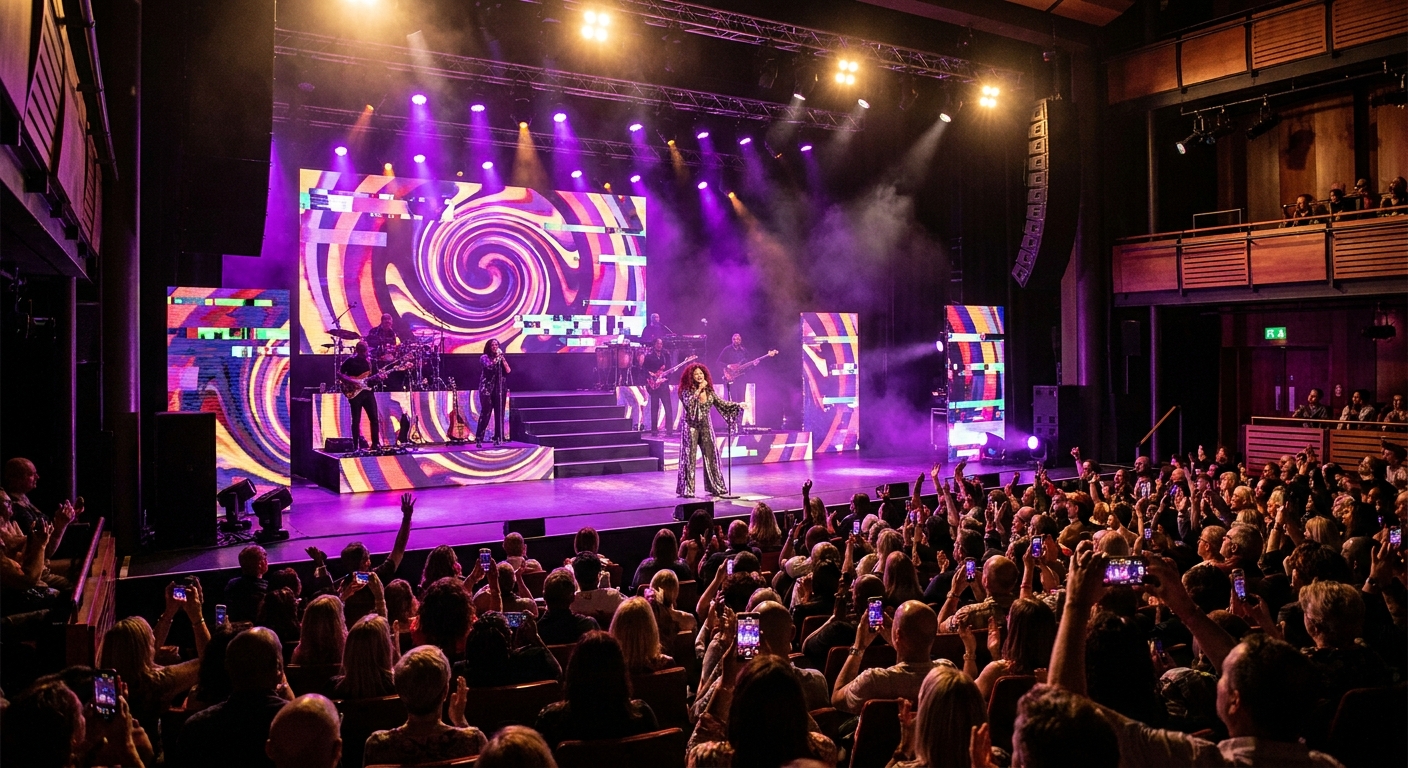
Your feed is full of screaming key changes, glittery standing ovations, and people insisting the Chaka Khan musical is the event of the year. Fair enough if you are suspicious. London gets a lot of “must-see” jukebox shows that turn out to be little more than a playlist with nicer lighting. That is what makes I’m Every Woman interesting right now. It does not feel finished in the frozen, museum-piece way these shows often do. It feels alive. At the Troubadour, the word-of-mouth is not just hype. It is part of the engine. Audiences are reacting in real time, clips are spreading, and the production seems to be adjusting around that energy. So if you are looking for a clean yes or no for your Chaka Khan musical I’m Every Woman London review search, here it is. No, this does not play like a lazy cash-in. Yes, it still has rough edges. But those rough edges are part of why people are talking.
⚡ In a Hurry? Key Takeaways
- This looks much closer to a living concert-theatre event than a paint-by-numbers jukebox biopic.
- If you are booking, go soon. Early runs often change fast, and this is one of those shows where seeing the “in progress” version is part of the appeal.
- The biggest value here is not just nostalgia. It is the way the production uses Chaka Khan’s songs, band sound, and crowd energy to test a model that could travel well beyond London.
Why this show is suddenly everywhere
The short answer is that people do not seem to be leaving quietly.
That matters. Plenty of musicals get polite praise. Fewer create the kind of noisy, slightly evangelical reaction where people grab their phones outside the venue and start telling strangers to buy tickets. That is the phase I’m Every Woman is in.
The Troubadour helps. It is not a stiff old proscenium house where every bio-musical starts to feel the same. The space lets the show aim for something bigger, looser, and more like a shared night out. Not chaos. Not cabaret. More like a staged music experience with a pulse.
That is why the TikTok clips are landing. They are selling atmosphere as much as story. The clips say, “you had to be there,” which is still the best ad any live show can get.
So, is it a jukebox cash-in?
Not in the obvious way, no.
A standard jukebox quick-cash job usually has a familiar smell to it. Hit song. Thin scene. Wig change. Another hit song. Repeat until curtain call. The songs become checkpoints, not drama.
I’m Every Woman seems to be trying for something trickier. Instead of treating Chaka Khan’s catalogue like a row of trophies, it uses the songs to build scale, identity, and mood. That sounds basic, but it is where many diva biopics fall apart. They know the audience wants the anthem, but they do not always know what to do in the ten minutes before it.
Here, the songs appear to be doing more than fan service. They are helping create a public space around Chaka’s image and music. Less “then she recorded this.” More “this is what her voice means when a room full of people meets it together.”
What makes it feel different
1. The live-band sound is doing a lot of heavy lifting
This may be the least flashy reason the show is connecting, but it is probably the most important. A live band can turn a familiar catalogue from karaoke memory lane into something urgent. Chaka Khan’s music needs groove, attack, warmth, and a little danger. If you smooth it out too much, you lose the point.
That seems to be where this production is smart. It understands that these songs are not delicate museum objects. They need air in the room. They need rhythm you can feel in your ribs. That is a huge part of why audience clips are reading as electric rather than merely respectful.
2. The design thinks like an arena, not a scrapbook
Many artist biopics get trapped in visual literalism. Here is the childhood kitchen. Here is the record studio. Here is the awards show. It becomes a timeline with costumes.
The bigger, more interesting move is to design for impact instead of chronology. Reports from the Troubadour suggest the production is using arena-style scale, spectacle, and crowd-facing staging to make the audience feel included in the event. That is smart for Chaka. Her catalogue wants lift-off. It wants you looking outward, not squinting at a tiny recreation of a dressing room.
3. It is building community, not just recognition
This may be the clearest sign the show has real legs. People are not only saying, “I know that song.” They are saying, “I need my friends to see this.” That is a different level of buy-in.
Recognition sells a ticket. Community builds a run.
The risky part, and why it actually matters
Here is the thing most early coverage skips. Buzz does not mean a show is finished. In fact, the most exciting new productions are often the least settled.
That seems to be true here. Mid-run tweaks matter. Pacing can tighten. Character beats can sharpen. Song placement can change. A scene that stalls on Tuesday can be gone by Saturday. That is not a flaw in itself. It is how live theatre grows when producers are paying attention.
So when people ask whether the current excitement is “real,” the better question is this. Is the show producing the kind of reaction that makes improvement more likely? In this case, yes. Strong audience response gives the creative team clear signals about what is landing, what gets applause, what drags, and what deserves more room to breathe.
That is why this moment matters more than a standard opening-night verdict. You are watching a musical become itself in public.
Where it could still go wrong
Even the loudest word-of-mouth hit can wobble.
The biggest danger for any diva musical is balance. If it leans too far into mythology, it becomes a shrine. If it leans too far into plot mechanics, it loses the charge that brought people in. If it chases viral moments too hard, it can end up feeling engineered instead of spontaneous.
I’m Every Woman has to keep protecting the messy human center while delivering the bangers people came for. That is not easy. Chaka Khan is not a small personality, and her music does not invite understatement. The show has to be bold without becoming hollow.
So the challenge from here is clear. Keep the volume. Keep the joy. But make sure the storytelling can carry the weight between the applause breaks.
Why TikTok is helping this one more than usual
Some shows look good in a six-second clip and feel dead in the room. Others are the reverse. This one seems to benefit from social media because its strengths are communal and musical. A clip of a belt, a band hit, or a crowd response can communicate the core appeal very quickly.
That does not mean TikTok is telling the whole story. It rarely does. But in this case, it is not entirely lying either. The platform is amplifying what the production already does well. It is not manufacturing interest from nothing.
That is a key difference if you are trying to sort hype from substance.
What this means for fans, producers, and investors
For fans
If you love Chaka Khan, the appeal is obvious. But even if you are not a superfan, this looks like the kind of show that earns newcomers by sheer force of sound and atmosphere. You are not just buying a seat for a biography. You are buying entry into a live room with a point of view.
For theatre-makers
The lesson is not “find another icon and copy the format.” The lesson is that catalogue shows work better when they stop treating songs like heritage items and start treating them like active dramatic material. The audience can feel the difference immediately.
For investors and future presenters
This is the big one. Can it travel? Potentially, yes, if the production keeps refining the story spine while preserving the concert-scale payoff. A modern diva musical needs to work in clips, in reviews, and in the room. This one appears to understand that three-part test better than most.
Should you see it now or wait for a later version?
If you enjoy catching a show when it is still evolving, now is the time.
There is a special thrill in seeing a production before it hardens into its official export model. You get the raw voltage. You also accept that not every beat will be perfect. Some people hate that. Others love feeling the machinery shift in real time.
For this musical, the early, fragile, electric stage is part of the story. The audience is not just consuming the show. It is helping shape its next draft.
At a Glance: Comparison
| Feature/Aspect | Details | Verdict |
|---|---|---|
| Use of Chaka Khan songs | Songs appear to be used for dramatic momentum and crowd energy, not just box-ticking greatest hits placement. | A real strength |
| Production style | Live-band sound and arena-style staging give it the feel of an event rather than a museum biography. | Stands out in a crowded field |
| Current state of the show | Still developing, with audience response and likely tweaks shaping what the final long-term version becomes. | Exciting, but not fully settled |
Conclusion
If you have been rolling your eyes at the online noise, that reaction makes sense. Most buzzy musicals get treated like finished masterpieces before they have even learned how to breathe. I’m Every Woman is more interesting than that. Right now, it matters because it is still in that fragile, electric phase where audience reactions on social and mid-run tweaks at the Troubadour are helping shape its future. That makes this less a simple Chaka Khan musical I’m Every Woman London review story, and more a live test case for where diva musicals go next. The production’s smart use of Chaka’s catalogue, the punch of a real live band, and the arena-style design are all pushing it toward something bigger than nostalgia. It is trying to become a community event. If it keeps tightening the storytelling without flattening the energy, London may be watching the blueprint for a show that can travel far beyond this run.