Inside Trainspotting: The Musical’s West End Shockwave: How A 90s Cult Film Just Became 2026’s Riskiest Word‑Of‑Mouth Hit
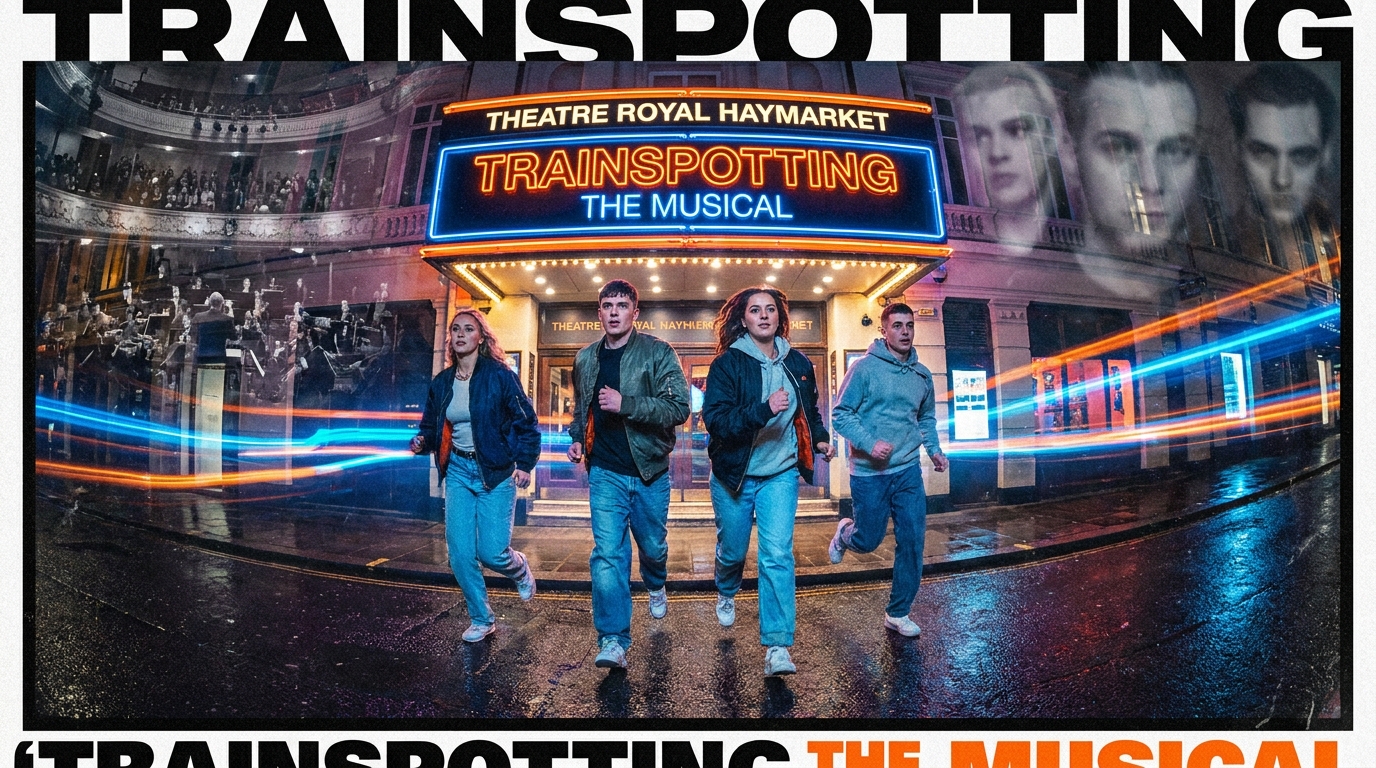
You can feel the fatigue setting in. Every new musical announcement promises “bold” and “fresh,” then turns out to be another polished adaptation with the rough edges sanded off. That is why the sudden noise around the Trainspotting musical West End 2026 run matters. It is not just another title drop. It is a real test of whether a major commercial stage will back something messy, abrasive, funny, and genuinely unsettling without cleaning it up so much that the whole point disappears.
The July 2026 West End premiere has become a talking point because it lands right where theatre feels stuck. Producers want big audiences, but audiences keep saying they are bored by safe choices. Fans want something that feels dangerous again, not fake-dangerous. So this show now carries a bigger question than whether the songs are good. It asks whether mainstream musical theatre still has room for material that does not behave itself, and whether word of mouth can do more for a risky show than a giant glossy campaign ever could.
⚡ In a Hurry? Key Takeaways
- The Trainspotting musical West End 2026 premiere looks important because it is testing whether raw, adult, high-risk material can still break through commercially.
- If you are deciding whether to book, watch early audience reactions, pricing moves, and casting buzz. Those will tell you fast if this is a real event or just curiosity traffic.
- This is valuable beyond one show. It is a live read on how much edge the West End can handle right now without losing mainstream buyers.
Why this one feels different
A lot of so-called edgy stage adaptations are only edgy in the press release. The branding stays. The bite goes. That is exactly why people are watching this one so closely.
Trainspotting is not an easy family title. It carries a reputation for grime, speed, bad choices, dark humor, and a very specific kind of 90s cultural electricity. Put that on a commercial West End stage in 2026 and you are making a serious bet. You are saying audiences may be ready for something less neat and less approved by committee.
That alone gives it heat. But the bigger reason it matters is timing. Theatre is expensive to make. Tickets are expensive to buy. And when both of those things are true, the temptation is to go safe. This show is pushing in the other direction.
What “shockwave” really means here
It does not just mean scandal, headlines, or pearl-clutching. In theatre terms, a shockwave means a title changes what other producers think is possible.
If Trainspotting catches on, even modestly, it could encourage more shows that trust younger audiences, allow uglier emotions onstage, and stop pretending every musical has to be designed for the broadest tourist crowd alive. If it stumbles, that will also send a message. It will tell investors that transgressive IP still scares off too many buyers when real money is on the line.
That is why this is bigger than one adaptation. It is a pressure test for the whole market.
Why word of mouth matters more than the usual hype
Big campaigns can only do so much
For a risky title, advertising gets people curious. It does not get them over the line. People need to hear, “No, really, this thing goes for it,” from friends, critics, theatre message boards, and social feeds they trust.
That is especially true for Trainspotting. Plenty of people will be skeptical. Some will worry it is a nostalgia cash-in. Others will assume the material has been softened to fit a big venue. The only thing that cuts through that suspicion is strong word of mouth.
The first audience reaction will shape the whole story
If early reactions say the show is chaotic in a good way, musically alive, and still sharp enough to sting, then it becomes an event. If the reaction is “interesting idea, but weirdly tame,” the buzz could cool very fast.
That is one reason the current chatter has been so intense. As explored in Inside Trainspotting: The Musical’s Wild West End Arrival: How A Gritty 90s Cult Story Just Became 2026’s Riskiest New Hit Bet, the main fear around a project like this is not that it exists. It is that it exists in a cleaned-up form.
The real gamble for producers
Risky shows do not just face creative pressure. They face practical pressure too.
Ticket pricing has to be smart
If prices are too high, younger audiences and curious fans may wait it out. That is dangerous for a title that needs urgency. Risky work often spreads because people can afford to take a chance on it. If every seat feels like a luxury purchase, the show loses one of its strongest advantages.
Marketing has to sell energy, not respectability
A safe adaptation can sell itself on familiarity. Trainspotting cannot rely on that alone. The campaign needs to communicate that this is not a museum piece and not a tasteful tribute to 90s cool. It needs to feel immediate. Fast. A little alarming.
Casting matters, but not in the obvious way
A famous name may help attention, but it is not enough. This kind of material lives or dies on credibility. Audiences have to believe the cast belongs inside this world. If the performances feel too polished, the whole thing can collapse into cosplay.
What fans should watch for before buying
If you are trying to work out whether this is the must-see new musical or just a headline-friendly stunt, focus on a few simple signs.
1. Are people talking about the tone?
Not just whether it is “good,” but whether it feels raw, funny, ugly, and alive. That tells you the adaptation has kept its nerve.
2. Are audiences mentioning the music after the plot?
With a title this famous, the story gets attention first. If people start talking about specific numbers, musical choices, or how the score changes the material, that is a very good sign.
3. Do prices and availability shift quickly?
If cheaper seats vanish early and return visits start happening, that usually points to genuine audience heat. If there is lots of noise but easy availability, the buzz may be thinner than it looks.
4. Is the conversation split in an interesting way?
Sometimes the best sign is disagreement. If some people love it and some cannot stand it, that can mean the show is actually doing something. Bland consensus is often a warning sign for “risky” work that is not risky at all.
Why artists and industry watchers are studying it
For creatives, this is useful because it gives a live example of how far mainstream theatre can go with language, subject matter, and emotional ugliness without losing a paying crowd.
For producers and industry people, it is a case study in market behavior. Can a non-family-friendly title still pull commercial audiences? Can a show with rougher edges survive premium real estate in the West End? Can edgy source material still move from cult fandom to broader demand?
Those questions are not abstract anymore. The Trainspotting musical West End 2026 launch puts them in public view.
Is it nostalgia, rebellion, or smart timing?
Probably all three.
Nostalgia gets people through the door. Rebellion keeps the conversation going. Smart timing makes the whole thing feel bigger than a single adaptation. Right now audiences are tired of being sold “different” and getting variations of the same glossy product. A show like this arrives as a challenge to that pattern.
That does not guarantee quality, of course. Risk can still fail. But even the attempt matters. It tells fans there may still be room on major stages for work that is less polite, less brand-safe, and less desperate to please everybody.
At a Glance: Comparison
| Feature/Aspect | Details | Verdict |
|---|---|---|
| Source Material Risk | A cult 90s story with drug culture, abrasive humor, and zero family-friendly cushion. | High risk, which is exactly why people are paying attention. |
| Commercial Strategy | Needs strong early audience reaction, sharp pricing, and marketing that sells urgency rather than polish. | Word of mouth will matter more than a standard ad push. |
| Audience Appeal | Best fit for fans craving something raw, modern, and less committee-made than many current adaptations. | Potentially a breakout if it feels truly dangerous and not fake-edgy. |
Conclusion
What makes the Trainspotting musical West End 2026 story worth following right now is not just the title. It is what the title represents. This show sits right at the point where theatre’s biggest current tensions collide. New productions cost a fortune. Audiences are tired of safe adaptation choices. And there is a growing appetite for edgier work that still has a real shot at selling.
That July 2026 West End opening turns a deeply non-family-friendly property into a public experiment. Can producers still take a big swing on transgressive material and survive? Can artists push tone, language, and subject matter further than usual without losing the mainstream? Can fans finally get a new musical that feels like an event, not just another launch graphic in the feed?
That is why keeping an eye on this matters. It helps fans decide whether this is the next must-see or a nostalgia trick. It helps artists read the limits of what commercial theatre will allow. And it helps anyone watching the business understand where the form might be headed next.