Inside Broadway’s ‘10 Things I Hate About You’ Earthquake: How A Cult 90s Teen Movie Just Became Theater Twitter’s Biggest 2027 Bet
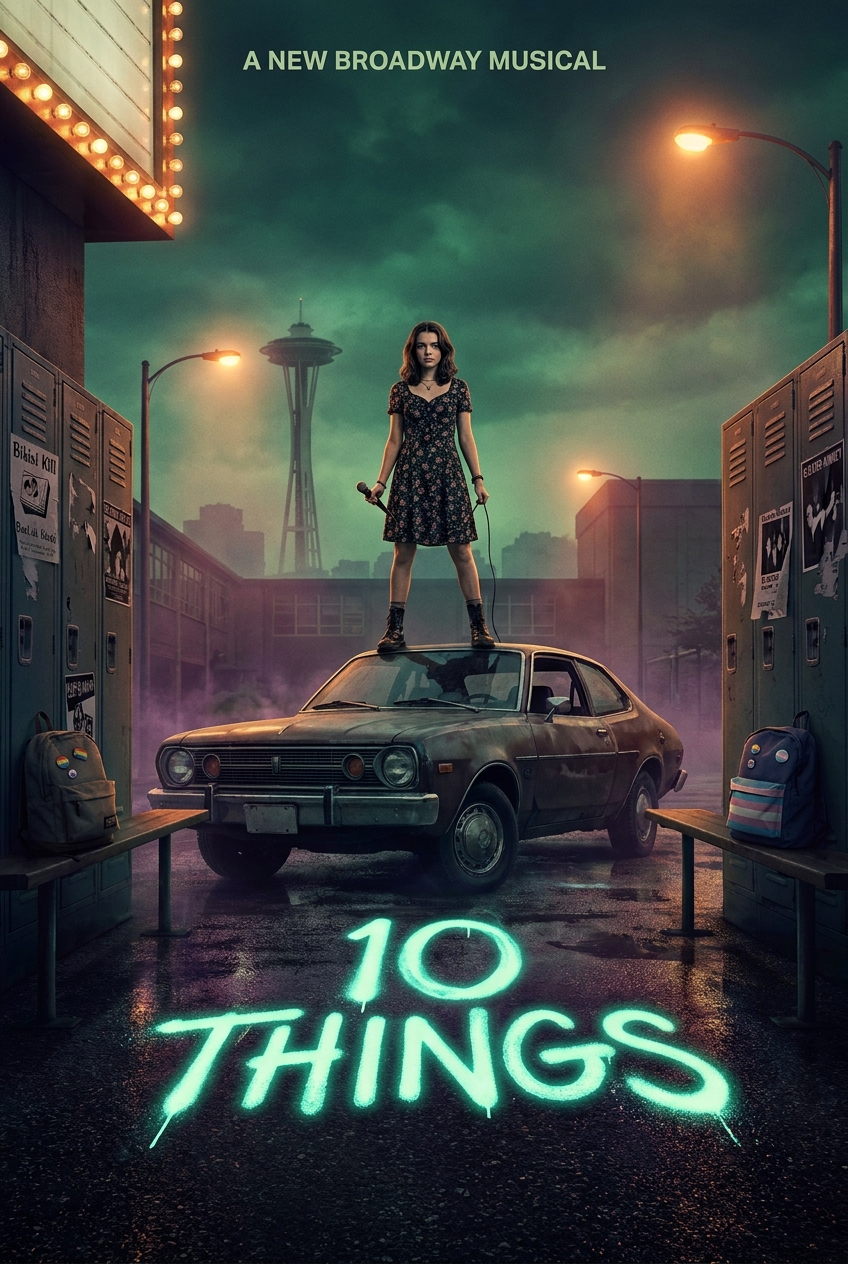
If your group chat has turned into a civil war over the 10 Things I Hate About You Broadway musical, you are not alone. Right now, theater fans are stuck with the worst kind of cultural news cycle. Too many whispers, not enough facts, and a flood of instant opinions anyway. One side sees a dream package. Lena Dunham, Carly Rae Jepsen, a beloved 90s teen movie, and the promise of a sharper queer angle. The other side hears “IP adaptation” and braces for a glossy, expensive karaoke version of something they already loved. Both reactions make sense. This project touches nostalgia, feminism, teen angst, queer fandom, and Broadway’s long habit of getting all of those things half right. So let’s slow it down. Here is the useful part of the story. What is actually being rumored, why this team is causing such a strong reaction, and what this show could mean if it lands, or if it face-plants.
⚡ In a Hurry? Key Takeaways
- The rumored 10 Things I Hate About You Broadway musical is such a big deal because it mixes a loved teen movie with a creative team people either deeply trust or deeply distrust.
- Before you pick a side, watch for three things: the score, how the queer storyline is handled, and whether the show keeps the movie’s bite instead of sanding it down.
- Early buzz is still just buzz. Workshop gossip can be useful, but it is not the same as a finished Broadway show.
Why this rumor hit so hard
Some announcements make a splash. This one hit like a dropped tray in a quiet restaurant.
The reason is simple. 10 Things I Hate About You is not just another catalog title pulled off a studio shelf. For a lot of fans, it is a core text. It is funny, romantic, messy, angry, and weirdly sincere. It has the kind of emotional imprint that makes people protective. The second you say “Broadway musical,” people start mentally listing every adaptation that turned sharp material into bland content.
Then add the names floating around this project. Lena Dunham is a lightning rod. Carly Rae Jepsen has genuine pop credibility and a fan base that hears “theater score” and starts vibrating through walls. That split is why theater Twitter is treating this less like a normal industry item and more like a referendum.
What people mean when they say it is “locked in”
“Locked in” in Broadway talk rarely means what regular people think it means.
It usually means the project has moved past daydream status. There is enough creative and financial alignment that insiders believe it is on a real track, not just sitting in a producer’s folder. It does not mean every song is done, every casting call is set, or opening night is around the corner.
That distinction matters. Theater rumor culture has a habit of treating early momentum like a finished product. It is smarter to read this as: serious enough to discuss, too early to worship or bury.
Why the creative team feels like a wild swing
Carly Rae Jepsen is not random casting for the score
This is the part skeptics should not dismiss too fast. Carly Rae Jepsen understands yearning at a molecular level. That sounds dramatic, but it is also true. Her best songs live in the exact emotional neighborhood that made the movie stick. Crush panic. Defensive coolness. Big feelings hidden under jokes. Teenage self-invention.
If the score really leans into that, the show has a chance to feel contemporary without pretending to be “for the youths” in a fake, embarrassing way.
Lena Dunham is the bigger debate magnet
Dunham’s name changes the temperature instantly. Fans who like her work think she can write messy young women who are funny, self-protective, and a little hard to love at first. Fans who do not like her work worry the show could become too self-aware, too chatty, or too locked into one kind of feminist voice.
That tension is not a side issue. It is the issue. Kat Stratford cannot feel domesticated. If the book gets too polite, the whole thing falls apart. If it gets too arch or too online, that can break it too.
The queer storyline question is not small
This is one of the big reasons people are paying such close attention to workshop gossip.
Fans are hearing that the adaptation may push the material in a more openly queer direction, whether through Bianca’s orbit, supporting characters, reframed relationships, or simply a broader lens on teen identity than the 1999 film could manage. That would not be cosmetic. It would change the center of gravity of the show.
If handled well, it could make the musical feel less like a museum piece and more like a real update. If handled badly, it will look like a marketing bullet point pasted onto a familiar title.
This is where Broadway audiences have become much less forgiving. People can smell checkbox representation from the mezzanine.
What early workshop gossip is actually saying
Workshop gossip is always slippery, but patterns matter. The broad story fans keep hearing is that the material is aiming for a brighter pop engine than a lot of recent movie-to-stage adaptations, while trying to preserve the original’s sarcasm and emotional thorns.
That sounds promising. It also sounds difficult.
The biggest challenge for the 10 Things I Hate About You Broadway musical is tone control. The film works because it is sweet and hostile at the same time. It lets romance happen without pretending gender politics are solved. It sells giant feelings while letting everyone look a little ridiculous. If the musical can keep that balance, people will forgive a lot. If it turns into generic empowerment anthems plus one ironic prom number, people will clock it immediately.
Why this could reset the teen-musical conversation
Broadway keeps coming back to teen stories because they are naturally high-stakes. Everything feels life or death at seventeen. The problem is that many stage versions flatten teenage life into either cute nostalgia or trauma homework.
10 Things has a shot to break that pattern because the source material already contains friction. It is romantic, yes, but also prickly about popularity, sexual double standards, performance, and the rules girls are asked to follow. That gives a writing team more to work with than “remember this soundtrack?”
If the show also makes room for queer perspective and stronger AAPI-centered storytelling, it could matter beyond simple fan service. Not because one musical fixes Broadway, but because hits teach investors what they think audiences want next.
The AAPI-centered story question matters more than people are saying
One of the easiest mistakes in adaptation talk is focusing only on the loudest controversy. Here, that means the internet tends to zoom in on nostalgia and queer discourse, while the AAPI angle gets treated like a footnote. It should not.
Stories about teen identity on Broadway have often centered the same kinds of faces, families, and emotional frameworks. If this production uses casting, characterization, and point of view to widen that picture in a real way, that is not decoration. That is part of the show’s potential cultural value.
And yes, audiences notice when this is done honestly versus when it is used as branding.
The doom-scroll trap fans should avoid
It is tempting to decide right now that this will be either the defining pop musical of the season or a cringe nostalgia cash machine. But theater history is full of projects that sounded terrible on paper and worked, and projects that sounded bulletproof and died in previews.
If you want a recent example of how weirdly fan culture can misread adaptation energy, look at Inside Broadway’s Lost Boys Frenzy: How A Cult Vampire Classic Quietly Became 2026’s Dark-Horse Fan-Hit. That show became a perfect case study in how cult-IP skepticism and fan excitement can both miss the middle, which is where the real story usually lives.
That is the useful frame here too. Try not to confuse your hopes or your fears with evidence.
What to watch next if you want the smart read, not the hot take
1. Listen for song function, not just song quality
A catchy score is great. But the real test is whether the songs reveal character or just summarize vibes. The best adaptation scores do emotional work the movie could not do on its own.
2. Watch how Kat is written
If she becomes only a symbol of empowerment, the character shrinks. She needs sharp edges, bad moods, brains, and vulnerability. Too polished equals dead on arrival.
3. Pay attention to whether Patrick stays complicated
He cannot just be a swagger delivery system. The tension between performance and sincerity is why that romance works at all.
4. See whether the humor survives
This is not a minor issue. A lot of stage adaptations get so busy proving they are meaningful that they forget to be funny.
5. Notice who the show seems to be for
If it only plays to people who already love the movie, it may have a short life. If it can speak to younger audiences who did not grow up with Heath Ledger on a stadium staircase, then it has real legs.
So, is this a dream project or a cash-grab?
Honestly, it could still be either. That is why people are obsessed.
The ingredients for a thrilling musical are there. A title people care about. A composer with emotional pop instincts. A writer who can provoke strong reactions, which is sometimes better than inspiring none at all. Rich territory for queer storytelling. Real room to rethink how Broadway handles teen and feminist material.
The danger signs are there too. Overfamiliar IP. Audience overexpectation. Social media pressure that rewards instant judgment. And the classic adaptation problem of sanding off the exact things that made the original feel alive.
At a Glance: Comparison
| Feature/Aspect | Details | Verdict |
|---|---|---|
| Creative Team | Carly Rae Jepsen brings pop precision and emotional lift. Lena Dunham brings voice, edge, and controversy. | High-risk, high-reward pairing. |
| Source Material | The 1999 film has deep fan loyalty, strong characters, and enough bite to support a real adaptation. | Better raw material than many nostalgia musicals. |
| Biggest Risk | The show could smooth out the sarcasm, flatten the feminism, or treat queer updates like branding instead of storytelling. | Execution will decide everything. |
Conclusion
The best way to think about the 10 Things I Hate About You Broadway musical right now is not as a guaranteed masterpiece or an obvious disaster. It is a live wire. That is why everyone is talking about it. This helps the community today because the announcement is the first truly polarizing, internet-native musical bombshell of the new season, and people are scrambling for one clear, smart breakdown that sits between stan hype and doom-scroll cynicism. If you map the creative gamble, the workshop chatter, and the stakes around queer, teen, feminist, and AAPI-centered storytelling, you get something much more useful than a hot take. You get a framework. And that is what fans and industry watchers need right now, a better way to argue, speculate, and maybe even get excited without pretending certainty exists yet.