Inside Broadway’s Secret Casting Scramble: How An ‘Unannounced’ Fall 2026 Show Just Became Every Young Performer’s Wildcard Bet
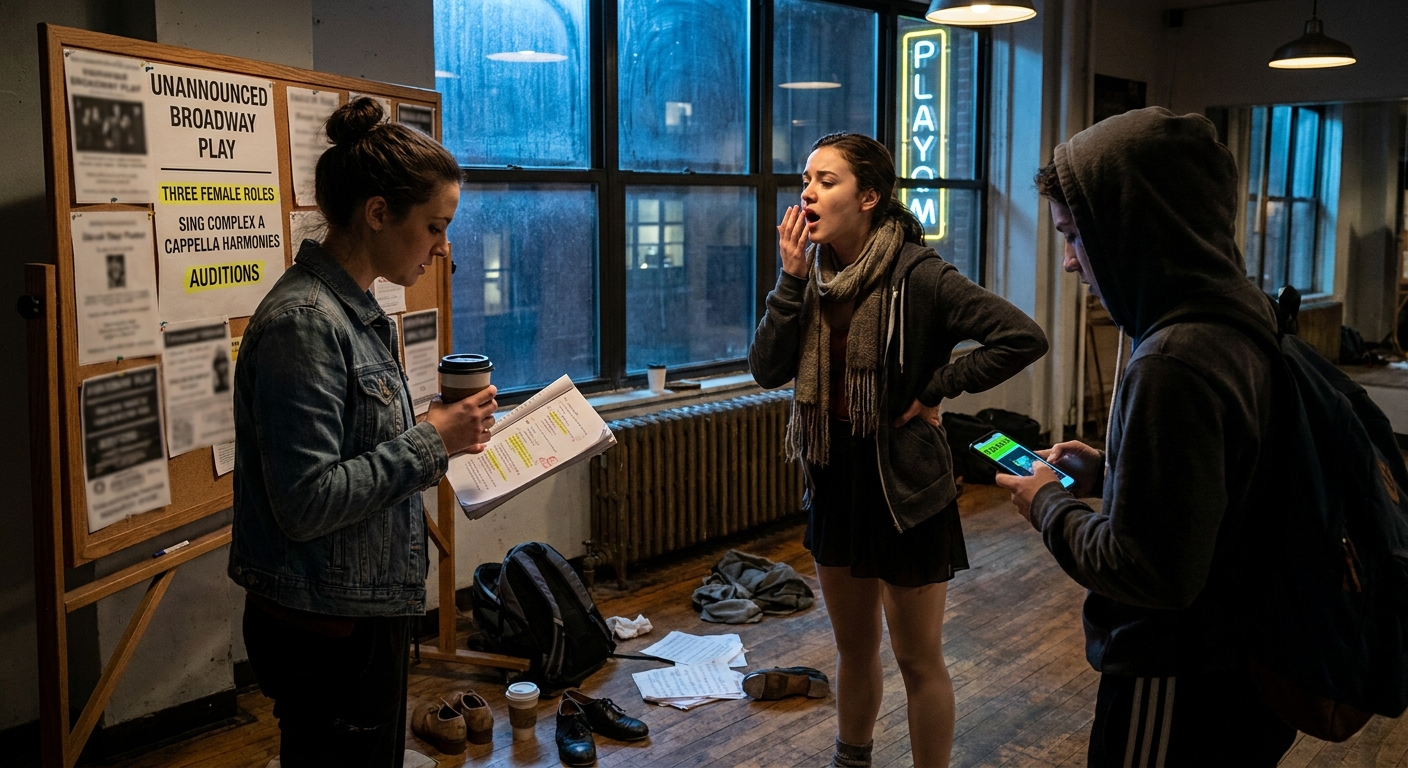
Trying to spot the next Broadway hit early can feel ridiculous. By the time a show has a title, a logo and a splashy press release, the useful part of the story is already over. The auditions have happened, the creative team has made key choices and the real clues have slipped by in dry casting notices most people never read. That is why this new update matters. A high-profile but still officially unannounced Broadway play for Fall 2026 just changed its EPA breakdown to ask for three women who can sing tight a cappella harmonies. That sounds small. It is not. It is the kind of tiny line-item change that tells you a show may be shifting from straight play territory into something more musical, more structured and more experimental. For actors, that means a very specific skill set suddenly matters. For fans, it is a rare chance to watch a Broadway project change shape before the marketing machine even exists.
⚡ In a Hurry? Key Takeaways
- This unannounced Broadway play Fall 2026 casting update strongly suggests the project is adding a music-driven element, not staying a straight play.
- If you are a performer, start brushing up now on tight three-part a cappella harmony, blend, pitch control and ensemble listening.
- EPA notices are not final blueprints, but they are one of the best early-warning systems for tracking how a show is developing before the public sees it.
Why this tiny casting change is a big deal
On paper, the update is simple. The production now wants three women who can sing tight a cappella harmonies. If you do not live in casting-breakdown land, that might sound like a routine note. It is not.
A straight play usually does not suddenly need a highly specific vocal texture unless music is becoming part of the storytelling in a real way. Not background flavor. Not a quick transition. Something more intentional.
That is why people paying attention are reading this as a signal. The show may be becoming a hybrid play-with-music, or at least experimenting with vocal storytelling inside a dramatic structure.
What “tight a cappella harmonies” tells us
It points to precision, not casual singing
Anybody can be asked to carry a tune. “Tight a cappella harmonies” is different language. It suggests close listening, controlled blend and probably a clean, rehearsed sound where each voice matters. That usually means the harmony is not decorative. It has a job to do.
It hints at style
A cappella harmony can signal a lot of things. Ritual. Memory. Commentary. Sisterhood. Irony. Even a period sound. We do not know which one this production wants yet, but the request narrows the possibilities.
If a team asks for three women specifically, they are likely imagining a recurring sonic shape. Maybe a Greek chorus feel. Maybe scene transitions. Maybe emotional underscoring built from voices instead of an orchestra. Maybe all of the above.
It suggests the writers are still building
This is the most interesting part. Changes like this often show that a piece is still in motion. Something in a workshop, reading or internal draft probably clicked. Or did not click. So the team adjusted.
That is the fun of following early casting. You are not seeing the finished house. You are catching the blueprint while someone is still moving walls.
Why actors should care right now
If you are a young performer watching unannounced Broadway play Fall 2026 casting news, this is your wildcard clue. You cannot control whether you get in the room. You can control whether you are ready for the room that is coming.
Skills worth sharpening immediately
Start with the basics.
- Three-part harmony singing
- Matching tone with other singers
- Holding your note without drifting
- Entering cleanly without instrumental support
- Switching fast between acting and singing
If you have ever treated harmony as “nice to have,” this is the sort of notice that reminds you it can become the deciding factor.
What to practice this week
Do not overcomplicate it. Grab two friends and record yourselves singing triads, close harmony folk lines or simple choral passages with no piano after the first note. Listen back. Are you blending, or just singing near each other?
That is often the difference.
Why fans and industry watchers should care too
This is not just actor homework. It is also a rare look at how Broadway actually forms.
Fans are often trained to think the story starts when the title is announced. It does not. By then, the most interesting creative shifts may already be old news inside the room.
Casting notices, union postings and breakdown tweaks can reveal the weather before the storm hits. They tell you whether a serious drama is starting to use music, whether a new musical is leaning comic or dark, or whether a role is changing age, tone or even purpose.
That is why this little update matters so much. It is not gossip. It is process.
What this may mean for Fall 2026
Broadway has been more open lately to projects that do not fit neat boxes. Plays with songs. Musicals with sparse scoring. Movement-heavy pieces. Storytelling that borrows from concert form, choral form and traditional drama all at once.
If this unannounced project really is shifting toward a play-with-music format, it could land as part of that larger mix. Not a classic belt-it-to-the-back-row musical. Not a talky prestige play either. Something in between.
And that middle space is where some of the most interesting work is happening.
How to read an EPA notice like a pro
You do not need insider status. You just need to know what to watch.
Look for changes, not just listings
A fresh notice is useful. An updated notice is gold. If language changes, ask why. New vocal requirements, movement notes or age adjustments usually mean the piece itself is changing.
Watch for specificity
“Strong singer” is broad. “Tight a cappella harmonies” is specific. The more specific the ask, the more likely it reflects a real structural need in the material.
Pay attention to group makeup
Three women is not random. Casting numbers can hint at scene shape, chorus function, family dynamics or recurring vocal architecture.
The smart takeaway for performers
Do not wait for the official announcement. That is the whole lesson here.
When a breakdown quietly points toward harmony-heavy storytelling, the smart move is to prepare before the crowd catches on. Work on listening. Work on blend. Work on musical confidence without accompaniment.
That does not just help with this one mystery project. It helps with the broader direction theater seems to be heading.
The smart takeaway for superfans
If you love being early, start reading the breadcrumbs instead of waiting for the billboard. Broadway does not appear fully formed overnight. It mutates in paperwork first.
And sometimes one line in a casting notice tells you more than a glossy teaser ever could.
At a Glance: Comparison
| Feature/Aspect | Details | Verdict |
|---|---|---|
| Original expectation | An unannounced Fall 2026 Broadway play with little public detail and no clear music-forward identity. | Looked like a standard straight-play development track. |
| New casting clue | EPA update now asks for three women who can sing tight a cappella harmonies. | Strong hint that music is becoming a core storytelling tool. |
| What to do with the info | Actors should train harmony and blend now. Fans should track future revisions for more signs of format change. | Useful early signal, even if the final form still changes. |
Conclusion
This is why early casting language matters. A high-profile, still officially unannounced Broadway play for Fall 2026 just added a request for three women who can sing tight a cappella harmonies, and that one detail may be the clearest sign yet that the project is shifting into hybrid play-with-music territory. For performers, that is not trivia. It is a practical nudge to sharpen a real skill now, before the rest of the field catches up. For serious fans, it is a front-row look at how a show changes shape long before key art, a title or a big press blast arrives. Read these notices like a weather report. They will not tell you everything, but they can tell you what kind of theatrical season is starting to form on the horizon.