Inside ‘Operation Mincemeat’ On Broadway: How London’s Quirkiest Wartime Underdog Just Became New York’s Smartest New-Hit Bet
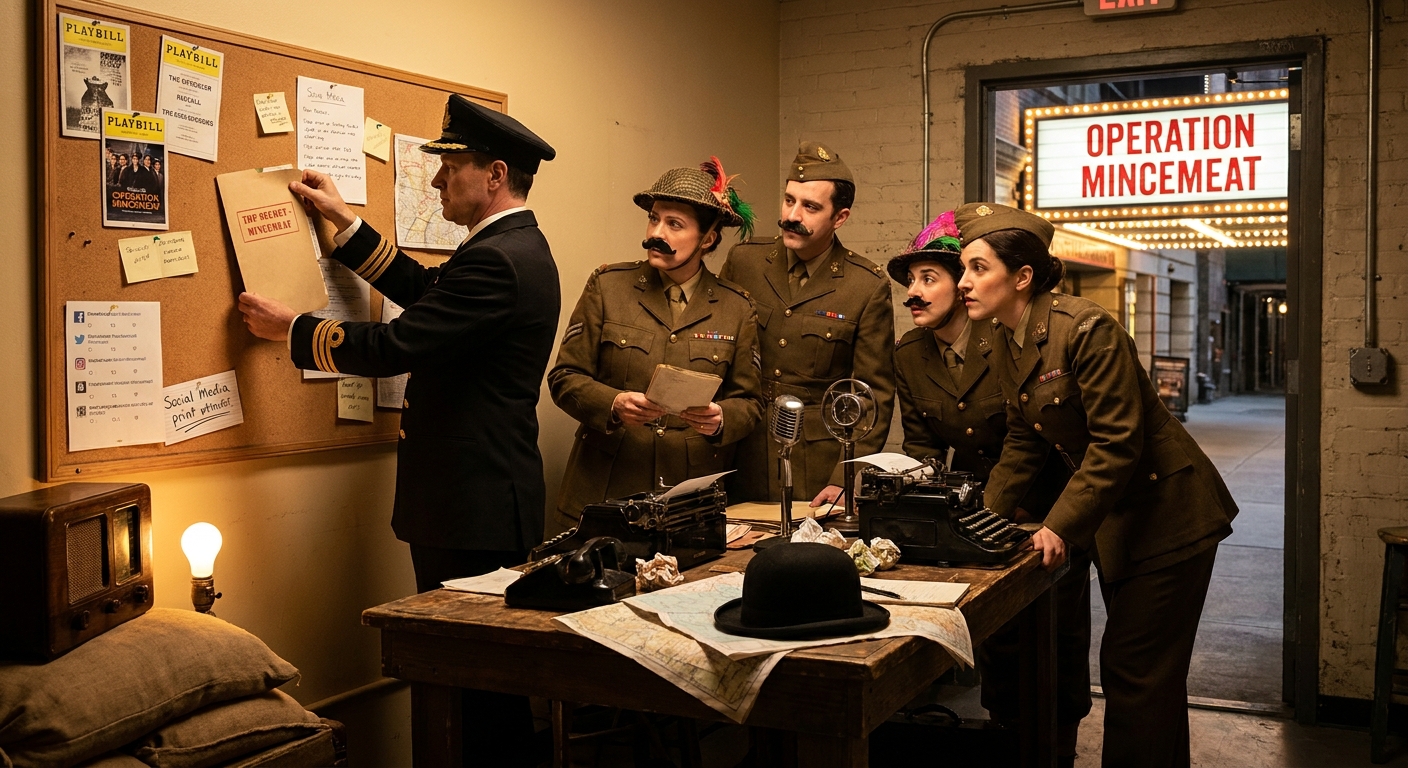
You are not wrong to be suspicious of Broadway buzz that sounds a little too neat. Most coverage tells you what is selling, who is above the title, and how hard it is to get a ticket. It rarely tells you why a strange little show suddenly becomes the one people keep texting their friends about at 11 p.m. That is exactly what makes the Operation Mincemeat Broadway musical worth paying attention to. On paper, it sounds like a risky bet. A five-actor musical comedy about a real World War II deception mission is not the usual safe-play Broadway formula. But that is the point. It got this far because it did not behave like a committee-built product. It behaved like a show with a personality. Its rise from fringe oddity in London to West End hit to Broadway arrival says a lot about what audiences are hungry for right now, and why “small but specific” can beat “big but bland.”
⚡ In a Hurry? Key Takeaways
- The Operation Mincemeat Broadway musical is catching on because it feels bold, funny, and genuinely different in a season full of familiar choices.
- If you make or follow new theatre, study how this show built fandom through voice, repeat viewings, and smart online sharing instead of trying to please everyone.
- Its biggest lesson is simple. Do not sand off the weird parts just to look “Broadway ready.” Those weird parts may be the whole reason people care.
Why this show matters more than its box office grosses
Broadway fans have been feeling a little starved lately. Not for content. There is always content. But for surprise. For discovery. For that electric feeling that something original has slipped through the cracks and made it anyway.
The Operation Mincemeat Broadway musical arrives at exactly that moment. People are tired of waiting for the next movie adaptation, jukebox brand extension, or revival with a famous face and not much else. They want a show that sounds like someone actually had an idea.
This one does.
It is based on a bizarre real wartime mission, but it does not treat history like homework. It treats it like material. The result is a show that is knowingly ridiculous, sharply crafted, and much more emotionally grounded than its title suggests.
What actually made it a hit in London
The easiest mistake is to think this was a fluke. It was not. The show’s rise was weird, yes, but not random.
It started small and stayed specific
Operation Mincemeat did not come out of a giant commercial machine. It grew from a scrappy creative identity. That matters because audiences can smell when something has been overcooked. This did not feel overcooked. It felt discovered.
The creators trusted a very particular comic tone. Fast. Dry. A little chaotic. A little heartfelt. Very British, but not in a way that shuts people out. Instead, it gives the show a point of view, and point of view is what too many new musicals lack.
It used limitations as part of the appeal
Five actors. Multiple roles. Tight staging. Constant switching. That could sound like a budget note. Onstage, it becomes part of the thrill.
Audiences love seeing a show solve problems in real time. They love clockwork. They love watching performers pull off something difficult with style. A smaller show can sometimes feel bigger because your brain is more involved.
It built fans, not just customers
This may be the most important part. The show did not just attract ticket buyers. It created people who wanted to recruit other people.
That difference is huge. A customer goes once. A fan posts clips, quotes lines, buys again, brings a friend, and turns the cast album into free marketing. Word of mouth is still the best ad in theatre. This show gave people something fun to talk about.
If you want a good companion read on that idea, Inside ‘Operation Mincemeat’: How A Bonkers DIY War Musical Quietly Took Over Broadway And The West End gets at the same core truth. People did not just like this show. They felt like they had found it.
Why Broadway is suddenly a smart bet, not just a brave one
Transfers from London always come with a question mark. What kills in one city does not always travel. Humor can flatten. Pace can shift. Context can get lost. So why does the Operation Mincemeat Broadway musical feel like a smarter bet than it might have a year ago?
Broadway audiences are hungry for something that feels alive
When the market gets crowded with “safe,” unsafe starts to look appealing. Not reckless. Just alive.
That is where this show has good timing. It is not arriving into a healthy ecosystem of wildly original new musicals. It is arriving into a conversation about why so many new musicals feel cautious. That makes its oddness a strength, not a liability.
Its premise is weird, but its mechanics are clear
A real wartime plan. Fake identity. High stakes. Quick role-swapping. Big laughs. Underneath the silliness, there is a clean engine. Audiences do not need to know the history in advance. They just need the show to know exactly what game it is playing.
And it does.
It is the kind of title people remember
This sounds minor. It is not. “Operation Mincemeat” is a title people repeat because they cannot quite believe it is real. That alone sparks curiosity.
Curiosity is gold in a crowded market. If someone hears about three new shows in one week, the one with the title that sounds slightly unhinged already has an edge.
How social media helped without swallowing the show whole
Plenty of productions are online. Very few actually understand what online excitement is good for.
The smart thing here is that the social chatter supported the show’s identity instead of replacing it. Fans were not trying to sell “content.” They were sharing a feeling. Jokes. Cast chemistry. Favorite moments. The sense that this was a club worth joining.
That is much more powerful than a generic marketing push.
It gave people shareable hooks
You do not need every song to go viral. You need enough specific moments that fans can point and say, “This. This is why you need to see it.”
Shows that travel well online often have at least one of these things:
- A clear comic voice
- Performers with visible chemistry
- An underdog story behind the production
- Moments that sound good out of context and better in context
Operation Mincemeat has all four.
It kept the fandom feeling earned
This is another big lesson for producers. You cannot force cult energy. The minute a marketing team acts like a fandom exists before it actually does, people tune out.
Here, the fan enthusiasm looked organic because it was. The show gave people reasons to care first. The internet just made that care visible.
The biggest creative lesson. It did not “fix” itself into blandness
This may be the real story under the hype.
When smaller shows move up the food chain, there is always pressure to tidy them up. Make them broader. Make them shinier. Explain the joke more clearly. Smooth out the odd corners.
Sometimes that helps. Often it drains the battery.
The Operation Mincemeat Broadway musical seems to understand that its eccentric voice is not an obstacle to overcome. It is the product. If you remove the odd rhythm, the comic nerve, and the handmade feel, you are left with a much less interesting show.
That is useful well beyond this one title. Emerging writers and indie producers should pay attention. The thing that makes your work harder to pitch may also be the thing that makes it impossible to replace.
What this means for writers, superfans, and indie producers
For writers
You do not need to start with the “most commercial” idea in the room. You need a show with a strong internal logic, a distinct voice, and enough belief behind it to survive the awkward early stages.
People say they want originality, then panic when originality looks unfamiliar. Keep going anyway.
For superfans
Your instincts matter more than you think. Audiences often spot life in a show before the larger market catches up. If you are the person always championing the odd little musical your friends ignored at first, congratulations. This story is for you.
The next hit may not arrive with a giant ad buy. It may arrive through whispers, clips, fan art, cast album loops, and one friend insisting, “No, trust me, this one is different.”
For indie producers
There is a practical roadmap here.
- Start with a strong identity, not a fake sense of scale.
- Make the constraints part of the show’s charm.
- Let fans feel like participants, not targets.
- Protect the voice that made the material stand out in the first place.
That does not guarantee a Broadway transfer. Nothing does. But it gives a left-field piece a much better shot than chasing whatever looked successful last season.
At a Glance: Comparison
| Feature/Aspect | Details | Verdict |
|---|---|---|
| Creative identity | A five-actor WWII comedy musical that kept its oddball tone instead of trying to look “safer” for Broadway. | Its weirdness is the selling point, not the problem. |
| Audience growth | Built momentum through repeat fans, strong word of mouth, and online sharing that felt natural rather than forced. | A strong model for how cult enthusiasm turns into commercial strength. |
| Broadway timing | Arrives during a period when many theatre fans are frustrated by cautious programming and over-familiar titles. | Very good moment for a show that feels fresh and personal. |
Conclusion
That is why the Operation Mincemeat Broadway musical is more than a quirky import with a clever title. It is a useful case study in how a small, funny, deeply specific show can break through when people are tired of polished sameness. It arrived at the right moment, yes, but it also did the hard part. It earned trust, built fandom, used social media without letting social media define it, and kept its own odd voice intact on the way up. For a theatre community nervous about a new musical drought and worn down by safe revivals, that is not just encouraging. It is practical. Emerging writers, superfans, and indie producers can look at this path and see something concrete. Left-field material does not have to wait for Hollywood IP to clear the room. Sometimes the strangest show in the stack is the one with the clearest future.