Inside The 2026 Jimmy Awards Livewire: How Broadway’s Youngest Stars Are Quietly Rewriting What A ‘Hit Musical’ Looks Like
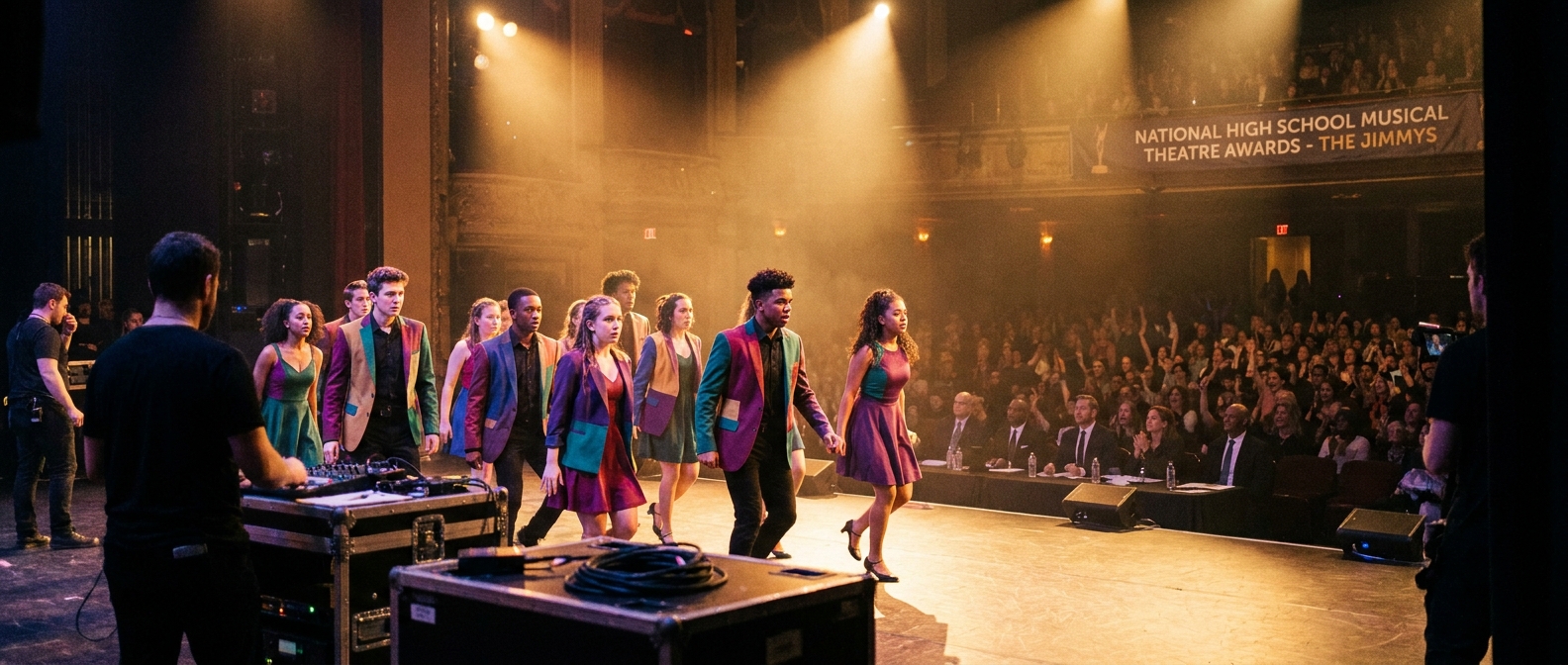
If you only catch the Jimmy Awards through a 20-second belt clip on social, you miss the part that actually matters. That is the frustrating thing. By the time the internet decides who “won” the night, the bigger signal is already buried under applause gifs and reaction posts. The 2026 Jimmy Awards Broadway high school musical theatre showcase is not just a cute pipeline event for ambitious teens. It is one of the clearest live stress tests for where musical theatre is heading next. On June 22, 2026, the 17th annual ceremony puts regional winners from across the country on a Broadway stage and asks them to do the hardest thing in the business. Connect fast, tell a story cleanly, and make a huge house care right now. If you want to spot tomorrow’s hit musicals, casting trends, and school licensing favorites before the Tonys catch up, this is the night to watch closely.
⚡ In a Hurry? Key Takeaways
- The 2026 Jimmy Awards are less about naming one standout teen and more about showing, in real time, which performance styles and song types are connecting with Broadway gatekeepers.
- Watch for story-first acting, genre-mixing songs, and performers who shift mood quickly. Those are strong clues to what schools, regionals, and commercial producers will want next.
- Highlight reels are useful, but they flatten context. The real value comes from tracking repeated audience reactions, judging patterns, and which material lands under pressure in a live Broadway house.
Why the Jimmy Awards matter more than most fans realize
People often talk about the Jimmys like they are a polished talent contest. That sells them short.
The Jimmy Awards are really a compressed industry lab. Dozens of high school musical theatre standouts arrive as regional champions, then rehearse at speed, adjust to Broadway-level expectations, and perform under a level of scrutiny that looks a lot like the professional world. That makes the event unusually useful if you care about what comes next in musical theatre, not just what already made it.
Broadway itself can be slow to reveal new patterns. A big commercial show may take years to move from workshop to opening night. Licensing trends for schools often lag behind by another cycle. The Jimmys shrink that timeline. You get a fast snapshot of what young performers can already sell, what material feels fresh to audiences, and what emotional beats still cut through in a crowded field.
What makes the 2026 edition especially worth watching
The 2026 Jimmy Awards Broadway high school musical theatre field arrives at a moment when musical theatre is changing in plain sight.
You can see it in writing styles. Songs are less boxed into one classic lane. Contemporary pop writing, folk textures, alt-pop intimacy, R&B phrasing, and comedy with very sharp emotional turns all sit closer together now. You can see it in acting too. The old divide between “big Broadway voice” and “subtle actor” matters less than it used to. Right now, the most exciting performers are often the ones who can flip between the two without making it feel like a trick.
That is why the 2026 show is useful as an early warning system. It captures young artists who have grown up absorbing Hamilton, Six, Dear Evan Hansen, Hadestown, Disney stage craft, TikTok pacing, and camera-aware performance habits all at once. Their instincts tell you a lot about what the next generation thinks a musical should feel like.
How Broadway’s youngest stars are quietly rewriting the idea of a hit musical
1. Story clarity is beating pure vocal fireworks
A huge note still gets applause. It always will. But at the Jimmys, pure vocal power by itself usually is not the full story.
The performers who change the room tend to make the audience understand the character in seconds. They know where the scene starts emotionally. They know what the lyric is doing. They build a moment instead of just decorating it. For producers, writers, and educators, that matters because it rewards shows that give actors playable material, not just impressive music.
That is one reason many future school and regional hits will likely come from shows with strong character engines and clear internal stakes. A song that lets a young actor reveal a turning point may travel farther than one that only asks for a clean high belt.
2. Hybrid styles feel normal now, not experimental
Older ideas of a “Broadway sound” are fading. The Jimmy stage often makes this obvious fast.
When contestants move between legit phrasing, pop attack, conversational acting, and rhythm-heavy sections without blinking, they are showing what audiences under 25 already accept as normal. This changes what a hit musical can sound like. Instead of one sonic identity from top to bottom, the next wave of successful shows may be built around contrast. A funny number can sit beside a confessional ballad. A folk-rooted song can live next to a dance break. If the emotional truth is there, the mix works.
3. “Playable in schools” may matter more than ever
This part is easy to overlook if you only follow Broadway grosses.
The Jimmy Awards are filled with performers coming out of school and regional ecosystems. That means the event naturally highlights what kinds of songs, scenes, and characters young companies can actually use. If a number consistently lands in this setting, that is a clue. It may have a long life beyond New York because it gives student performers something real to do and gives audiences something immediate to feel.
That is where the licensing goldmine angle comes in. A future hit is not only a show that sells premium Broadway tickets. It can also be the title every high school, youth company, and regional theater wants because the material feels current, castable, and emotionally legible.
What to watch on the night, beyond the obvious big notes
Watch the first 15 seconds
Can the performer claim the space instantly? That opening matters. On a stage as big as the Minskoff, hesitation reads loudly. The strongest contestants often tell you exactly who they are and what the moment is before the song properly settles in.
Watch transitions inside songs
Anyone can rehearse a big finish. The harder part is shifting from joke to ache, or anger to vulnerability, without losing the thread. Those quick turns are where modern musicals often live. If the contestant nails those pivots, the material may be pointing toward where writing trends are headed.
Watch what gets the deepest quiet
Not every winning moment sounds like a roar. Sometimes the biggest clue is the hush in the room. If the house locks in during a small, specific acting beat, that tells you audiences still crave intimacy, even in large commercial spaces.
Watch which songs feel portable
Ask a simple question. Could a school, youth company, or regional cast use this number and make it work for their own audience? If yes, you may be looking at the kind of material that spreads fast and shapes the wider culture of musical theatre.
What industry judges are really rewarding
Judges at the Jimmys are not only measuring technical polish. They are often responding to professional readiness.
That includes things like adaptability, command, pace, text clarity, emotional control, and whether a performer can take a familiar number and make it feel inhabited rather than copied. Those are the same qualities that help new musicals travel from workshop rooms to commercial runs.
So when a contestant breaks through, do not just ask, “Was that voice amazing?” Ask, “Did that performance suggest the kind of role and writing style producers will want to build around?”
The hidden roadmap for fans, teachers, and creators
This is where the Jimmy Awards become more than a celebration.
For superfans, they offer a cleaner way to spot future stars before casting announcements make them obvious.
For drama teachers and school directors, they give practical clues about which kinds of songs and shows connect with young performers right now.
For writers and producers, they reveal the new vocabulary of musical storytelling. Not just what sounds good, but what communicates fast in a room full of people with very high standards.
That “vocabulary” matters. You can see it in performers who favor specificity over generic sincerity, in songs that balance irony with real feeling, and in material that trusts an audience to follow emotional jumps quickly. Those habits shape what the next generation will call a hit.
What not to do when reading the results
Do not reduce the night to one winner and one viral clip.
The better move is pattern spotting. Which styles show up again and again? Which emotional beats keep landing? Which song types seem to give contestants the most room to reveal character? Which performances feel built for a Broadway house, and which feel ready to spread through schools and regional companies?
If you track those patterns, the 2026 Jimmy Awards Broadway high school musical theatre event becomes much more than a one-night showcase. It becomes a field report.
At a Glance: Comparison
| Feature/Aspect | Details | Verdict |
|---|---|---|
| Best signal to watch | Whether performers can tell a crystal-clear story under pressure, not just sing impressively | Strong clue for future casting and writing trends |
| Most revealing material | Songs with sharp emotional turns, genre mixing, and playable character stakes | Likely source of future Broadway and licensing momentum |
| Biggest mistake viewers make | Focusing only on viral high notes or final awards instead of repeated audience and judge reactions | Misses the real roadmap hidden in the full event |
Conclusion
The smart way to watch the Jimmy Awards is not as a recap machine for social media. It is as a live scan of musical theatre’s next operating system. Running on June 22, 2026, the 17th annual Jimmy Awards bring dozens of regional champions into one live, high-pressure showcase on a Broadway stage, which makes it the single most concentrated snapshot of what musical theatre is becoming right now rather than what has already won its Tonys. If you pay attention to which songs, styles, and micro-moments land with the Minskoff crowd and industry judges, the Legend The Musical community gets a real edge. You are not just watching talented students. You are getting an early briefing on tomorrow’s casting trends, school and regional licensing winners, and the evolving storytelling language that could shape the next wave of Broadway and global hits.