Inside ‘Trainspotting’ The Musical’s West End High-Wire Act: How 90s Grit Just Became London’s Riskiest New-Season Bet
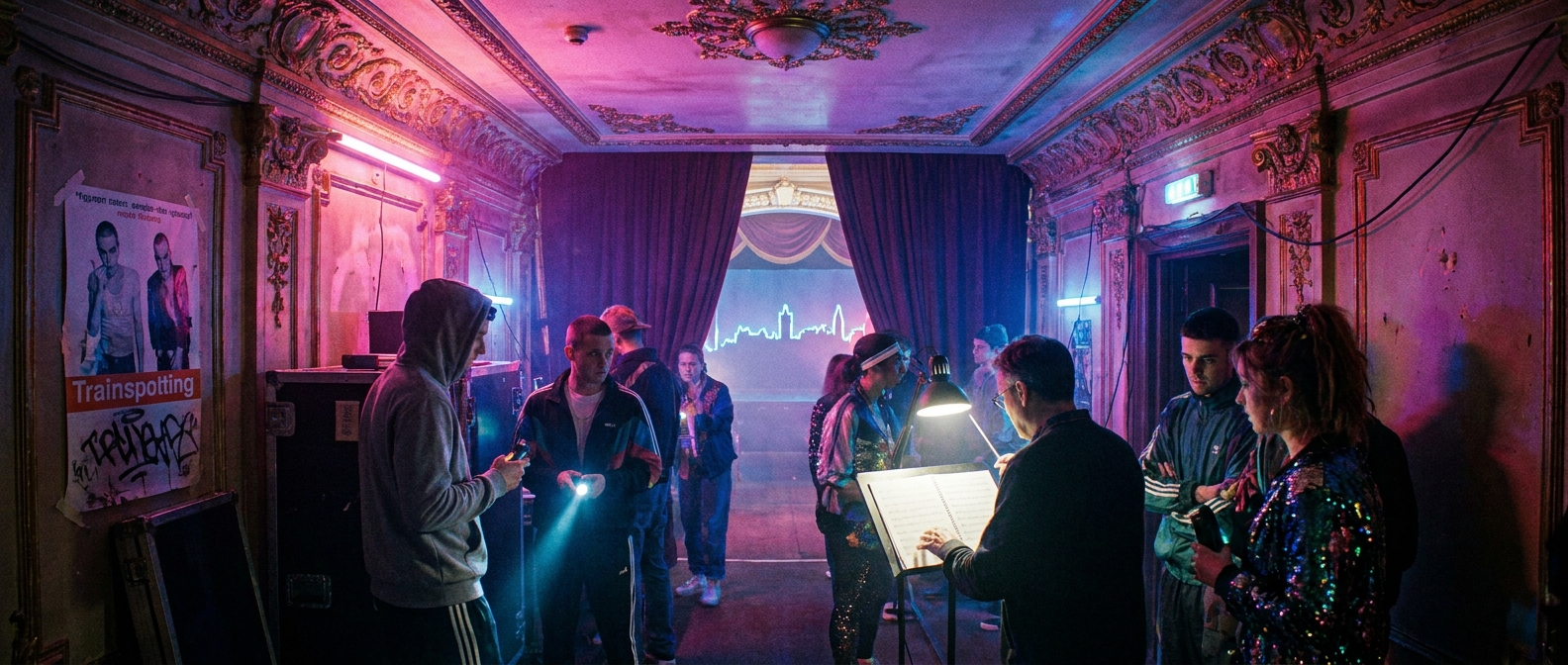
You can spot the problem a mile away. A famous title gets revived, the posters look expensive, the press release says “electrifying,” and somehow you still finish reading with no clue whether the thing is actually brave or just loud. That is exactly why the Trainspotting musical West End 2026 rollout matters. This is not just another adaptation trying to cash in on a familiar brand. It is a live stress test. Can a story built on heroin, alienation, bad choices and ugly honesty survive the smoothing effect of commercial musical theatre?
That is the real high-wire act behind this July 15 world premiere. If the team sands off the grime, it becomes 90s cosplay for tourists. If they cling too tightly to the original’s chaos, it risks turning into a niche experiment that cannot fill a West End house. The interesting part sits in the middle. Every early signal, from staging choices to preview chatter, suggests the creative team knows the danger is the point. The question is whether they can make audiences feel that danger without making the show collapse under it.
⚡ In a Hurry? Key Takeaways
- This is a risky West End bet because Trainspotting is built on discomfort, and musicals usually need broad audience warmth to survive commercially.
- If you are deciding whether to book, watch for early audience word on tone. Does it feel raw and specific, or polished and safe?
- Its real value goes beyond one production. It is a useful case study in whether big-stage musicals can still take creative risks without becoming generic.
Why this adaptation feels genuinely dangerous
Most stage adaptations are risky in the way a chain restaurant is “spicy.” They want to look bold without scaring off the paying public.
Trainspotting is a harder sell. The title comes with baggage. Fans of Irvine Welsh’s novel and Danny Boyle’s film expect bite, not a souvenir version of transgression. Meanwhile, regular West End audiences do not always buy tickets hoping for a night spent inside moral collapse.
That tension is what makes this one interesting.
A musical has to do several jobs at once. It has to tell the story clearly. It has to create emotional release. It has to justify why characters are singing at all. With Trainspotting, that last point is the trap. If the songs feel too neat, the world becomes fake. If they are too jagged, the show may lose rhythm and repeat custom.
The central creative problem: how do you sing ugliness without cleaning it up?
This is where the behind-the-scenes choices matter more than the marketing copy.
Tone is everything
The biggest danger is not outrage. It is prettification. Put bluntly, nobody needs Trainspotting with shinier lighting and a cheeky wink. The material only works if the production keeps the desperation, gallows humor and social rot that made the story matter in the first place.
That means the creative team has to resist three common musical-theatre habits.
- Turning every dark moment into catharsis.
- Giving antiheroes too much charm.
- Replacing mess with message.
Trainspotting was never loved because it offered tidy lessons. It hit because it felt immediate, funny, gross and sad at the same time.
Music has to act like pressure, not decoration
If this show works, the score probably will not function like a standard West End melody machine. It needs to feel like pulse, paranoia, repetition, temptation and release. In a story like this, songs should not arrive like gift wrap. They should feel like part of the characters’ wiring.
That is the thing many glossy previews leave out. “Bold new music” tells you nothing. The useful question is simpler. Does the music make the room less comfortable in the right way?
Staging needs friction
A proscenium theatre can flatten dangerous material. Once chaos is framed neatly, it risks becoming a museum piece. So the smartest productions use movement, sound design, pacing and spatial pressure to stop the audience from settling in too nicely.
If early buzz keeps mentioning immersion, claustrophobia or a restless visual language, that is a better sign than hearing the set is “stunning.” Pretty is not the goal here.
Why producers are nervous, even if they will never say it plainly
Commercial theatre likes recognizable titles. It likes event status. It likes built-in audiences. Trainspotting gives them all of that.
It also gives them headaches.
This is not family-friendly nostalgia. It is not prestige literature in a corset. It is not a movie adaptation with easy singalong appeal. The title is famous, but the emotional temperature is hostile by design. That can create great theatre. It can also create a tricky box office story after the first curiosity rush.
The July 15 premiere matters because it will show whether West End producers really mean it when they say they want more distinctive musicals. It is easy to praise risk in panels and interviews. It is harder to bankroll a show that might split the room.
What preview buzz should you actually pay attention to?
Not all buzz is useful. Some of it is just volume.
Good signs
- People disagreeing strongly about it.
- Comments about the show feeling physically intense.
- Praise for performances that do not ask the audience to “like” the characters too much.
- Mentions that the humor is still nasty and human, not sanitized.
Warning signs
- Reviews or early reactions calling it “surprisingly uplifting” without explaining how.
- Heavy focus on brand recognition rather than artistic choices.
- Buzz that talks more about the soundtrack than the storytelling.
- Audience chatter that it feels like 90s dress-up.
That last one matters a lot. The easiest way to miss the point of Trainspotting is to treat the 90s as a costume rail. The story only lands if it still feels socially alive, not archived.
Why this is bigger than one opening night
The reason people in the industry are watching closely is simple. Musicals have a sameness problem.
Not all of them, of course. But enough big productions now arrive pre-smoothed for safety. Familiar story beats. Familiar emotional arcs. Familiar visual assurance that everybody is in good hands. That can be enjoyable. It can also be forgettable.
A show like Trainspotting tests whether the market will reward something rougher around the edges. Emerging writers should pay attention. So should producers who keep saying they want younger audiences, fresher forms and less interchangeable work.
If this production succeeds while staying abrasive, it opens a door. If it only succeeds after being softened, that tells us something too.
Who should consider crossing an ocean for it?
Not everyone.
If you want a polished comfort-watch in musical form, this may not be your trip. If you are curious about where commercial theatre might go next, though, this is exactly the kind of title worth tracking. The appeal is not just the property. It is the experiment.
This is especially true for:
- fans of the novel or film who care whether adaptation can preserve bite,
- theatre makers studying how “unsafe” material gets translated for large stages,
- regular audiences bored of shows that feel committee-built.
My practical read before opening
Right now, the smartest position is cautious optimism.
The concept has real danger baked in. That is good. It means the show cannot coast on craft alone. It has to make hard decisions about tone, sound, character and audience comfort. Those decisions are exactly what make behind-the-scenes reporting more useful than promotional blurbs.
If the creative team understands that the risk is not a bug but the engine, this could be one of the most talked-about new-season launches in London. If not, it could become an expensive example of what happens when commercial theatre mistakes edge for branding.
At a Glance: Comparison
| Feature/Aspect | Details | Verdict |
|---|---|---|
| Source material challenge | A cult 90s story tied to addiction, moral mess and anti-commercial energy | High risk, but genuinely fresh for the West End |
| Musical adaptation fit | Works only if the songs add pressure and psychology instead of smoothing the material out | Possible, but very easy to get wrong |
| Commercial outlook | Strong title recognition, but potentially divisive word of mouth after curiosity bookings | A real test of whether audiences want less interchangeable musicals |
Conclusion
If you have been burned before by breathless theatre marketing, your skepticism is fair. With Trainspotting, the useful question is not whether the show is “unmissable.” It is whether it dares to stay difficult once the lights go up in a very expensive room. That is why this matters right now. Trainspotting’s July 15 West End premiere is the clearest real-time test of how far commercial musical theatre is willing to go. Can a cult, drug-soaked 90s story live in a gilded proscenium without losing its teeth? By looking at the creative choices, preview buzz and early industry nerves before opening, we get something more useful than hype. We get a practical case study for fans, producers and new writers who want musicals to feel less interchangeable, and more alive.