Inside Lin-Manuel Miranda’s ‘Warriors’ Shockwave: How A Gritty Concept Album Just Became Broadway’s Most-Watched Bet For 2027
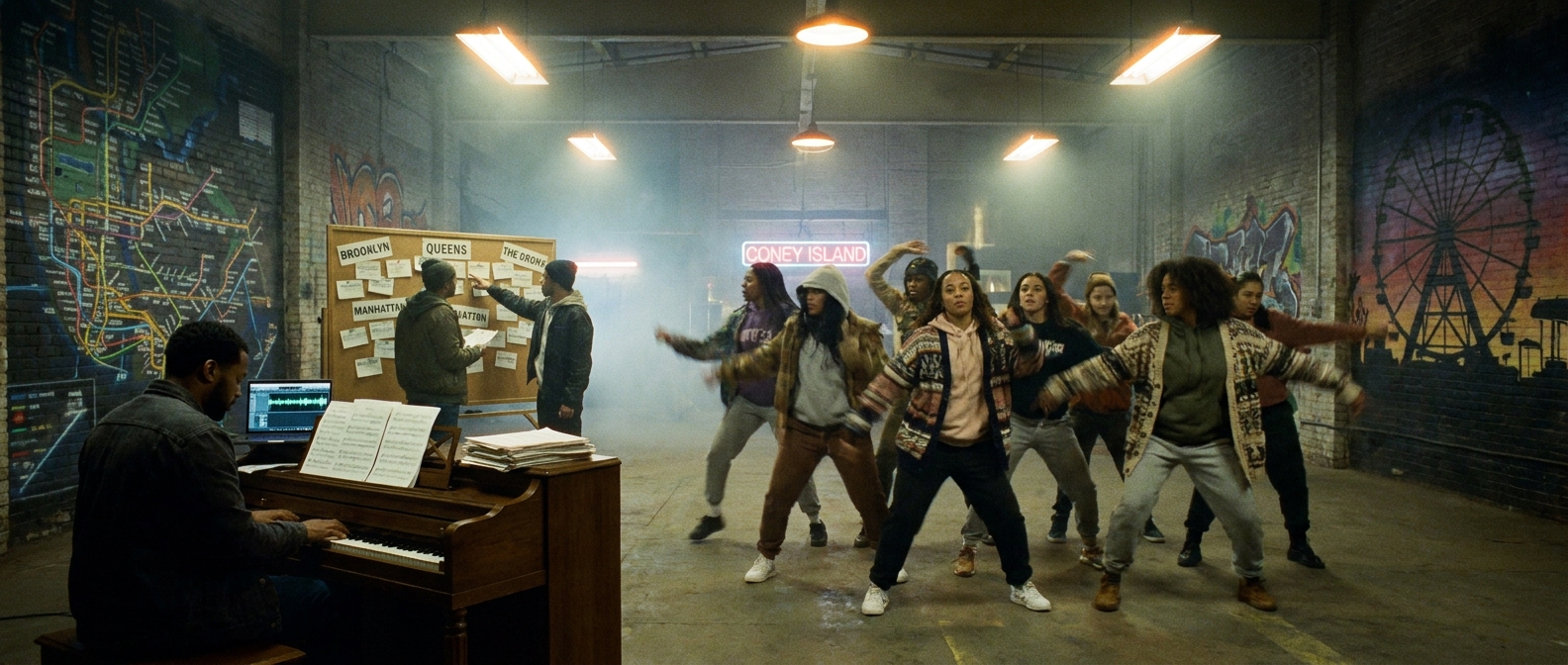
It is annoying when everybody says Broadway is quiet, then one title keeps crashing through your feed like it is opening tomorrow. That is the feeling around Warriors. Previews are not set to begin until spring 2027, yet theatre fans, writers, and producers are already treating it like the biggest long-range bet on the board. The big question is simple. Is this real momentum, or just another case of internet heat that burns out before first preview? Right now, the smart answer is that Warriors looks more serious than a normal hype cycle. It has Lin-Manuel Miranda’s profile, Eisa Davis’s writing voice, a built-in cult property, a concept album that can travel before the stage version arrives, and a creative angle that feels fresh instead of recycled. If you want to understand why this project matters, you have to look past fan excitement and study the strategy behind it.
⚡ In a Hurry? Key Takeaways
- Warriors is not just getting buzz because of Lin-Manuel Miranda. It is getting attention because the project already shows a strong long-game plan.
- If you are a writer or producer, study the rollout. Start with recognizable IP, add a fresh point of view, and build audience trust before opening night.
- Do not confuse fandom noise with proof. The real signs to watch are workshop progress, casting choices, audience response to the album, and whether the concept survives the move to stage.
Why people are suddenly obsessed with Warriors
The title has a lot going for it before a single ticket is scanned. First, it connects to a cult favorite. The Warriors has been around for decades as a novel, a film, and now a music-driven reimagining. That matters because cult IP gives people a reason to care early. They already know the world, the tone, and the danger built into it.
Second, this is not a plain remake. Miranda and playwright Eisa Davis are using the material in a way that changes the flavor. The most talked-about idea is the all-woman framing of the gang story. That one choice takes something familiar and makes people look again. It turns nostalgia into curiosity, which is a much stronger engine than nostalgia alone.
Third, the project has been introduced through a concept album. That is important. A concept album is like a public beta for a musical. It lets the creators test sound, story, tone, and audience reaction without the huge cost of a full production. For fans, it creates early emotional buy-in. For the team, it creates data.
What makes this different from random Broadway hype
It has a clear identity
A lot of announced shows sound vague until six months before previews. Warriors does not. Even people who only vaguely know the project can usually tell you the pitch. Gritty New York story. Cult source material. Miranda involved. Eisa Davis writing. Music-first rollout. Gender-flipped perspective. That clarity is a big deal.
When a project is easy to explain, audiences help market it for free. They repeat the pitch to each other. That is one reason theatre Twitter keeps circling back to it.
It blends genres in a way Broadway likes right now
Broadway has become more comfortable with shows that pull from several traditions at once. Hip-hop, spoken word, pop, R&B, downtown grit, and cinematic storytelling can all sit in the same room now. Miranda helped prove that years ago, but audiences are still hungry for work that feels theatrical without sounding old-fashioned.
Warriors seems built for that appetite. It can attract musical theatre fans, concept album listeners, film buffs, and people who normally do not buy Broadway tickets at all. That overlap is where big shows grow.
It is being discussed as an event, not just a title
The most successful modern musicals are often sold as events long before they are judged as finished art. That can sound cynical, but it is just how attention works now. People want a reason to follow development in public. Warriors gives them one.
And unlike some projects that try to fake event status with casting gossip alone, this one has substance under the chatter. There is material to hear, ideas to argue about, and a creative team people trust.
The Lin-Manuel Miranda factor, and why it helps without guaranteeing anything
Let’s be honest. If Lin-Manuel Miranda’s name were not attached, this would still be interesting, but it would not be this loud online. His involvement changes the attention level immediately. Fans assume ambition. Industry people assume money will pay attention. Media outlets assume clicks.
Still, name value is not the same as a hit. Miranda has enough credibility to make people show up early, but he cannot force a project across the finish line by reputation alone. That is actually useful for readers trying to separate signal from noise. The celebrity factor explains the size of the spotlight. It does not explain why the project keeps holding interest.
The stronger reason is that Miranda’s public brand fits this material. He is associated with rhythm-driven storytelling, city energy, and work that crosses audience lines. So the pairing feels natural, not random.
Why Eisa Davis may be the key piece casual fans are missing
Some of the online conversation treats Warriors like a Miranda project first and everything else second. That misses a huge part of the story. Eisa Davis brings the kind of writing voice that can keep the show from becoming empty style. Her presence suggests the adaptation wants emotional and political texture, not just cool production value.
That matters because gritty source material can go wrong fast onstage. It can become cartoonish. It can become self-serious. It can get trapped in homage. A writer with a strong dramatic point of view helps the show avoid those traps.
If you are an emerging writer, this is one of the best lessons here. Big audience hook plus serious storytelling brain is often a stronger combination than big hook plus bigger marketing budget.
The concept album is not a side dish. It is part of the business plan.
This is where the project gets especially interesting for indie producers and creators. A concept album can do several jobs at once.
It builds audience before the stage version exists
People can stream it, share favorite tracks, argue over interpretation, and form attachments to characters early. By the time tickets go on sale, the show is not a stranger.
It lowers the risk of total invisibility
Broadway is crowded. Even known names can get lost in the calendar. Releasing music first helps keep a project alive during the long wait between announcement and opening.
It tests what actually lands
Creative teams can see which songs catch on, which themes spark conversation, and whether listeners understand the world. It is not the same as a workshop, but it gives clues.
For non-techies, think of it like releasing a trailer, soundtrack sample, and audience survey all at once. You are not just advertising the final product. You are learning from the reaction.
Can this really become a Hamilton-level event?
Probably not in the exact same way, and that is fine. People toss around “the next Hamilton” because it is shorthand for cultural takeover. But those moments are rare. They depend on timing, politics, audience hunger, and sheer luck. You cannot plan one on command.
What Warriors can become is something more practical and still huge. It can become the kind of prestige commercial musical that starts with core fans, widens into mainstream curiosity, and then travels well through cast albums, touring, international productions, and maybe future screen life.
That may actually be the smarter target. Not every hit has to rewrite the whole culture. Some become very successful by being bold, distinct, and durable.
What smart readers should watch between now and 2027
If you want to track Lin Manuel Miranda Warriors Broadway musical 2027 like an insider, stop refreshing for random fan reactions and start watching the development signals that matter.
1. How the stage language evolves
A concept album can be atmospheric and exciting, but theatre needs shape. Watch for reports from labs or workshops that hint at pacing, character clarity, and whether the storytelling works live, not just in your headphones.
2. Casting philosophy
The casting will tell you how serious the production is about its identity. Are they choosing performers who can handle vocal style, physical intensity, and ensemble storytelling all at once? Or does the casting feel driven by obvious headlines?
3. Director and design team choices
This material needs a visual and physical world that feels dangerous without becoming messy. The right director and choreographic voice could turn the project into a must-see event. The wrong match could flatten it.
4. Whether the buzz expands beyond theatre diehards
Early hype often stays trapped in niche circles. A true breakout prospect starts reaching music fans, pop culture outlets, and people who do not normally discuss Broadway at all.
5. The ticketing and venue strategy
When that information arrives, pay attention. A production that expects major demand will signal confidence through timing, theater size, pricing approach, and early audience-building tactics.
What creators can steal from this rollout
You do not need Lin-Manuel Miranda’s fame to learn from this. That is the useful part.
Start with something people can describe in one sentence
If your project takes five minutes to explain, you are making audience growth harder than it needs to be. Warriors has a clean hook.
Use familiar material, but change the angle enough to matter
People like recognition, but they also want a reason not to skip it. Gender-flipped casting ideas and a new musical lens give this adaptation purpose.
Build in public, but not carelessly
The concept album approach gives the audience something real to engage with. It is not just vague teaser language. If you want attention early, release material, not empty promises.
Make the form match the audience
This project lives naturally in audio, online discussion, and stage speculation. That mix helps it travel. Think about where your own project can live before its final version is ready.
Is there any reason to be skeptical?
Yes. Plenty.
Stage adaptation is hard. The things that make a concept album exciting do not automatically create a satisfying evening in the theatre. Mood is not structure. Great songs are not the same as dramatic momentum. And fan excitement can make a project feel more complete than it really is.
There is also the pressure problem. When people spend two years calling something a future masterpiece, the final show has to beat not just expectations, but fantasies. That is a brutal standard.
So if you are looking for the grounded view, here it is. The hype is real, but it is still early. The project looks promising because the creative logic is strong, not because social media is loud.
At a Glance: Comparison
| Feature/Aspect | Details | Verdict |
|---|---|---|
| Current Buzz | High online attention well before previews, driven by the concept album, cult IP, and Miranda’s name | More than random chatter, but still not proof of a finished hit |
| Creative Strategy | Genre-mixing score, a fresh adaptation angle, and a public-facing rollout that builds loyalty early | Strong long-game planning, smart for both art and marketing |
| 2027 Outlook | Could become one of Broadway’s biggest openings if workshops, casting, and staging match the promise | A serious contender, but not a guaranteed culture-resetter |
Conclusion
Warriors matters because it gives readers a cleaner way to judge what is real in an industry that often runs on noise. If you are an emerging writer, indie producer, or plain old theatre obsessive, this is the useful takeaway. Do not just follow hype. Study structure. Miranda and Eisa Davis are showing how to mix cult IP, a new point of view, music-first audience building, and smart patience into a project that could grow far beyond opening night. Maybe it becomes massive. Maybe it lands at merely “very successful.” Either way, it is already a case study in how to build a show people want to track years in advance. That is the real value here. You get to separate long-game opportunity from momentary buzz, and maybe use a few of the same moves in your own work.