Inside ‘Water For Elephants’ Toronto Takeover: How Broadway’s Circus Epic Quietly Became 2026’s Most Important Global-Transfer Bet
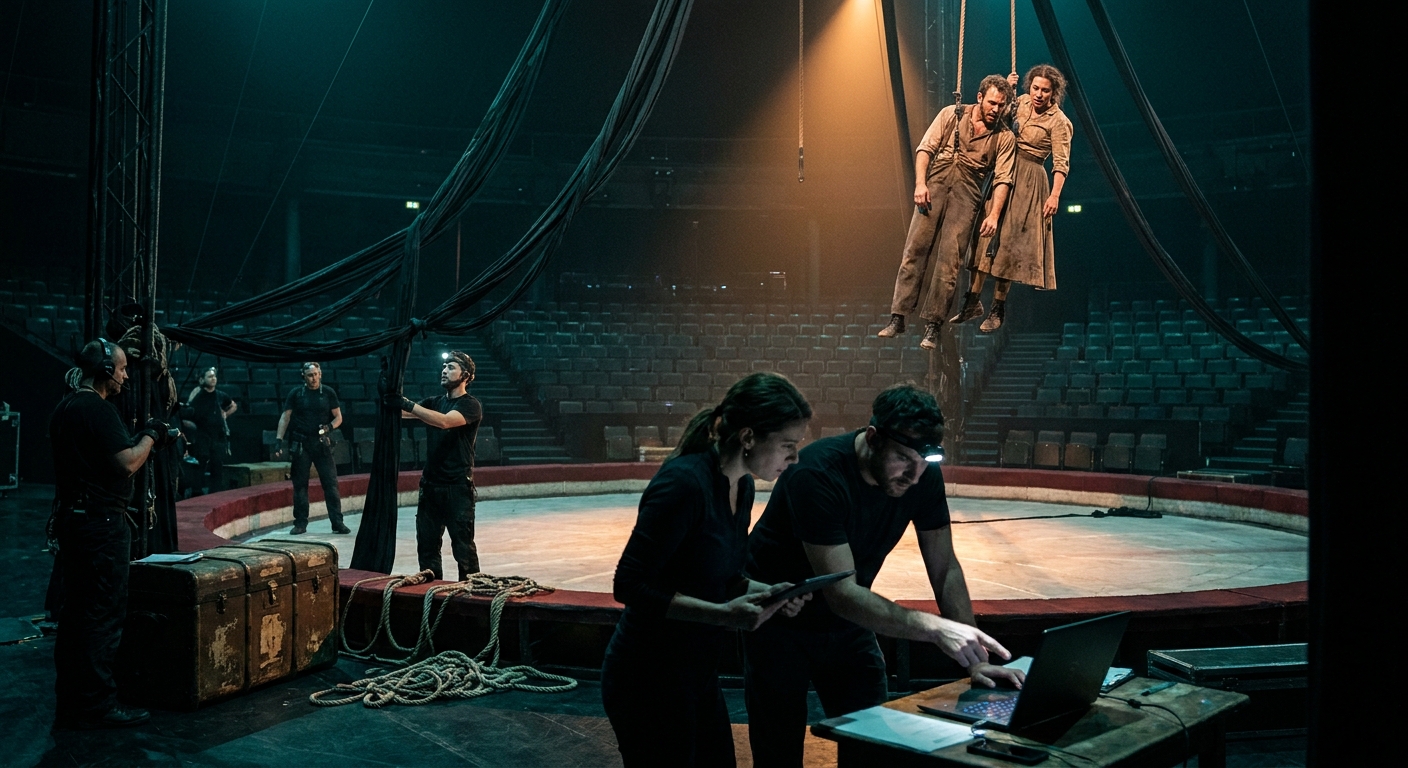
If you are tired of hearing about the same two or three Broadway titles while the actually interesting moves happen off to the side, you are not alone. A lot of theater fans want to know which shows have a real life beyond New York, not just a loud marketing budget. That is why the Water For Elephants Toronto musical premiere behind the scenes story matters more than it may seem at first glance. This is not just another sit-down production. It is a test of whether a Broadway-born musical with a big physical language, circus staging, and serious technical demands can travel intact to a major international market and build the kind of word-of-mouth that leads to tours, cast recording growth, and more global bookings. Toronto is not a random stop here. It is the lab. And the first forty-eight hours tell you a lot about whether this show is simply surviving after Broadway, or starting its second life.
⚡ In a Hurry? Key Takeaways
- Water For Elephants matters because Toronto is acting as a real-world test of the show’s long-term global transfer potential, not just a regional afterlife.
- Watch three things first: whether the full circus design survives the move, what changes are made for the Ed Mirvish Theatre, and how quickly local audiences start recommending it person to person.
- Early buzz can be useful, but do not judge a transfer by one review or one social post. The first two days usually reveal audience temperature, not the full run’s fate.
Why this Toronto move is bigger than it looks
When a Broadway musical leaves New York, people often assume one of two things. Either it is on its victory lap, or it is trying to recover after a mixed run. Real life is messier than that.
Water For Elephants sits in a much more interesting spot. It has a title people know, a visual identity people remember, and a stage language that depends on craft, movement, rigging, and ensemble precision. That makes it harder to move than a smaller chamber musical, but also more valuable if it works. If producers can prove the show lands in Toronto with its heart and spectacle still in place, they are not just selling tickets in one city. They are showing presenters around the world that this musical can travel well.
That is the key idea fans should hold onto. Broadway box office is only one chapter. The real question is whether a show can become exportable.
Why Toronto was the smart choice
Toronto has become one of the best places to test what happens after Broadway. It has strong theatergoing habits, a mix of local and tourist traffic, and audiences that are experienced enough to spot a stripped-down transfer from a real event.
For a show like Water For Elephants, that matters a lot. If the production arrived in a market that was willing to accept a reduced version on name alone, the results would tell us less. Toronto audiences, especially in a major house like the Ed Mirvish Theatre, tend to respond clearly and quickly. If the pacing drags, they feel it. If the design overwhelms the story, they notice. If the circus material and emotional plot click together, they spread the word fast.
Toronto also works because it sits in a sweet spot between Broadway prestige and international scalability. Success there can reassure booking partners in London, Australia, Asia, and large North American touring markets that the show is not tied to one building or one original New York moment.
What makes Water For Elephants a risky transfer in the first place
Some shows travel easily. A sofa, a staircase, a few star turns, done.
This is not one of those shows.
Water For Elephants depends on a full physical vocabulary. The circus material is not decoration. It is part of how the story breathes. The audience needs to feel danger, grace, memory, and motion all at once. When a production like that moves, every technical choice matters. Ceiling height matters. Wing space matters. Sightlines matter. Load-in schedules matter. Even how close the audience feels to the performers can change the emotional effect.
That is why this Toronto engagement is worth watching so closely. It tells us whether the team can preserve the show’s identity without turning it into a museum copy of the Broadway version.
Behind the scenes, what likely changed for the Ed Mirvish Theatre
1. Blocking and spacing
Even when producers say a transfer keeps the full design intact, that does not mean every move is identical. Stage dimensions and backstage flow almost always force some changes. Entrances may shift. Ensemble traffic patterns may tighten. Acrobatics and partner work may get recalibrated to fit local conditions safely and smoothly.
2. Rigging and physical performance timing
Anything involving aerial work, apparatus, lifts, or specialized circus transitions has to be rechecked in the new venue. That is normal, not a red flag. It just means the show’s visual thrills are built on systems, not magic. The best transfers make these adjustments invisible to the audience.
3. Sound balance and orchestral feel
Big houses can swallow lyrics if the mix is not tuned carefully. A musical with movement-heavy staging needs extra care so emotional scenes do not get lost after a large ensemble sequence. One of the first clues that a transfer is settling in well is simple. Can the audience hear the story clearly without strain?
4. Pacing between spectacle and intimacy
This is the sneaky one. A large-scale show can feel exciting in one theater and oddly distant in another. Teams often make tiny timing changes, hold for applause in different spots, or sharpen transitions so the emotional spine does not get buried under the wow factor.
Why “full design intact” is the phrase to watch
Plenty of productions announce a big move, then quietly arrive slimmer. Smaller sets. Reduced orchestra. Fewer ensemble players. Less technical ambition. Sometimes that is practical. Sometimes it drains the point of the show.
That is why the Water For Elephants Toronto musical premiere behind the scenes angle matters so much. If this production really keeps its design logic, circus vocabulary, and visual storytelling structure, it sends a message to the market. The message is that producers believe the show is worth investing in as a premium experience, not just as a recognizable title.
For fans, that is useful information. A show that travels with its identity intact has a much better shot at becoming the kind of title people discover in waves over years, not weeks.
What local buzz in the first forty-eight hours can tell you
The first two days after a high-profile opening are messy. Social feeds fill up with excitement, opening-night photos, and instant takes. You should not treat that as a final verdict. But you can learn a lot if you know what to look for.
Listen for repeated audience language
If people keep mentioning the same strengths without being prompted, pay attention. Are they talking about the acrobatics? The love story? The emotional ending? The elephant imagery? Repetition is a clue that the show is creating a clear identity in the new market.
Watch whether non-theater people start talking about it
This is a big one. Broadway insiders can praise almost anything for a night. The more important sign is when casual attendees say, “You need to see this.” That is how a musical starts moving from industry event to cultural recommendation.
Check whether the buzz is about the production or just the property
If people are mostly saying, “I liked the book” or “I know the movie,” that is weaker than audiences praising what happened on stage. You want heat around the theatrical experience itself.
Notice if criticism sounds fixable
Comments like “Act one felt long” or “the sound needed a tweak” are common and often solvable. Comments like “the spectacle drowned the story” are more structural. Early reactions matter most when they point to whether problems are technical or built into the material.
What this says about the modern musical life cycle
Fans sometimes treat Broadway as the finish line. It is closer to a launch pad.
A modern musical now lives across several stages. First comes the initial New York identity. Then the show either hardens into a single-market memory or proves it can translate. After that come tours, international productions, school and amateur futures, streaming album growth, and the long game of audience discovery.
Water For Elephants is interesting because it is entering that second phase in public view. We do not have to guess later. We can watch now. We can see whether a Broadway-originated piece with serious technical ambition can become a durable cross-market title.
How to spot the next breakout before everyone else does
If your goal is to catch the next true word-of-mouth musical before larger outlets pile in, here is the simple checklist.
Look at where it transfers
A move to a major market like Toronto means more than a quiet regional booking. It suggests confidence, money, and a plan.
Look at what travels with it
Did the production keep the features that made people care in the first place? If yes, that is a strong signal.
Look at audience behavior, not just ads
Are people buying late in the run because friends told them to go, or only because the marketing machine is shouting? Sustainable excitement usually sounds more human and less polished.
Look at whether the show solves a programming problem
Presenters want titles that feel prestigious, accessible, and visually distinct. Water For Elephants checks several of those boxes if the transfer works.
So, is this really 2026’s most important global-transfer bet?
It has a strong case.
Not because it is the loudest show. Not because it won the most argument on social media. Because it is trying something that the industry says it wants more often than it actually does. It is moving a Broadway-born musical with demanding craft to a major international market without sanding off the features that make it special.
That is a real test. And the results will ripple outward. If Toronto embraces it, other markets will pay attention. If the production proves it can maintain quality while adapting smartly to a new venue, it becomes easier to imagine future sit-downs, tours, and long-tail audience growth.
At a Glance: Comparison
| Feature/Aspect | Details | Verdict |
|---|---|---|
| Why Toronto matters | Major theater market, strong audience literacy, and useful international signaling power | Smart proving ground |
| Transfer challenge | Circus staging, technical demands, pacing, rigging, and emotional clarity all need to survive the move | High risk, high reward |
| What fans should watch | Design integrity, audience word-of-mouth, and whether early criticism is technical or structural | Best way to judge future global potential |
Conclusion
If you want to get better at spotting which musicals actually matter beyond Broadway, this is the kind of move to study. Water For Elephants is not just opening in another city. It is showing us, in real time, how a modern musical tries to become global. By watching why Toronto was chosen, what changes the team makes for the Ed Mirvish Theatre, and how local buzz forms in those first forty-eight hours, you get a much clearer read on the show’s future than a Broadway grosses chart could ever give you. That helps our community now, because it teaches us how to follow the real life cycle of a musical and identify the next wave of tours, cast album interest, and international productions before bigger outlets decide it is officially worth the noise.